How to Build a Brand in the Age of AI: 9 Steps for Business Owners
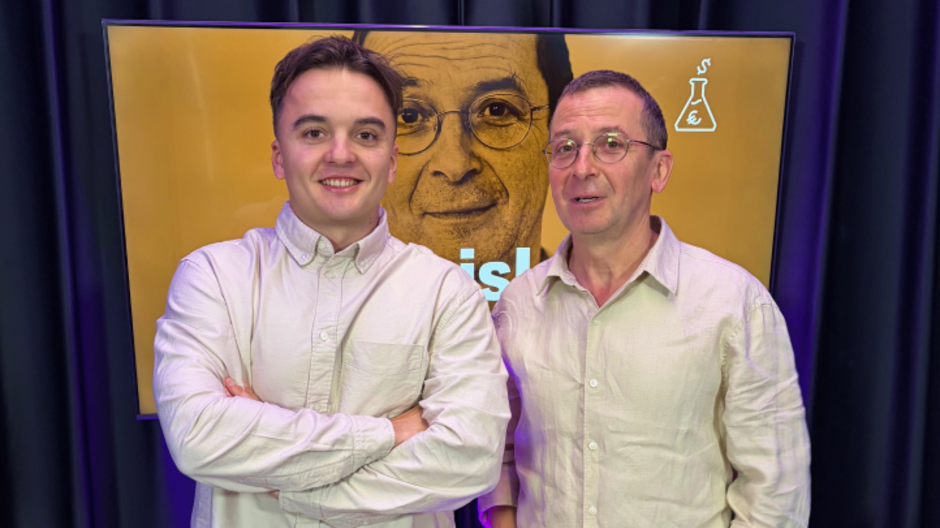
AI today can create an advertisement in a few minutes. But can it build a brand that people trust? Adam Hudeček, head of creativity at ui42, reveals in the Biznislab podcast how to build a strong brand in the era of artificial intelligence.
Why AI Can Create an Ad for You, But Won't Build Your Brand
Imagine a butcher shop that emphasizes honest craftsmanship, tradition, and manual labor in its advertisement. However, there's a catch – the entire ad was created using artificial intelligence.
Adam Hudeček mentions exactly such an example in the Biznislab podcast. "I waited until the end to see if there was any satire," he admits. According to him, such an ad can harm the brand more than help it. "Maybe we saved five crowns on a graphic designer in the first step, but in the second step, we lost a thousand euros in sales."
AI today can create content faster and cheaper than ever before. However, that doesn't mean it automatically helps build a brand. "Even my mom can compete with graphic designers," Adam says with a touch of humor. Creating an ad is easier, but maintaining consistent brand communication is a different challenge.
Artificial intelligence doesn't know all the contexts of your business. Today it recommends one direction, tomorrow another. "Then the brand can slip through my fingers. In March we communicated one way, in June another."
Therefore, a brand needs someone who holds its direction and decides when AI helps and when its outputs go against what the company promises.
How to build a brand that customers will remember and trust? From Adam's interview, we selected nine practical steps.
Step 1: Stop Confusing a Brand with a Logo
When it comes to building a brand, many imagine a new logo, colors, or a more modern website. However, all of this is just part of the puzzle.
"A brand is not what it says about itself, but what the customer thinks about it," explains Adam Hudeček.
A brand is thus the image of a company in the eyes of customers. Branding encompasses everything that creates this image - from strategy and name to visual identity and communication. Rebranding means changing an existing brand.
According to Adam, it often happens that a business owner knows exactly how they want to present their brand, but customers perceive it completely differently. It's not enough to promise something in an ad if it doesn't match their actual experience.
"If the customer experience is bad, it doesn't matter what kind of ad I have and what I promised."
What can you do today?
- Try to describe in one sentence what customers should think about your brand
- Look at your website, social media, emails, and customer support. Do they confirm this image, or do they contradict each other?
Step 2: Ask Loyal Customers Why They Return
Do you know why customers shop with you? The answer might be completely different from what you think.
Companies often base their communication on advantages they consider their strongest points. For example, on fast delivery, even though two to three days is a common standard today.
Adam Hudeček mentions a client in the podcast who had a clear idea of what he wanted to base his communication on. However, the ui42 team contacted 15 of his long-term customers and found out they returned for a completely different reason. "I'm trying to highlight something that people completely ignore, and I'm ignoring why they come back to me," Adam describes a common mistake in brand building.
A strong brand therefore doesn't just come from the business owner's ideas, but also from what customers truly appreciate about it. In their answers, you can discover an advantage that the competition cannot easily copy.
What can you do today?
- Contact 10 to 15 customers who shop with you repeatedly.
- Ask them why they chose you, what they would miss if you closed, and what alternatives they considered.
- Compare their answers with what you emphasize in your ads today.
Step 3: Build a Brand on Strategy, Not an Idea
A good idea for a logo or name doesn't mean you have a built brand. If it is to work long-term, it needs a clear strategy that determines who it speaks to, how it differs, and what it should evoke in customers.
At ui42, brand creation doesn't start with drawing a logo, but with a brief of 40 tailored questions. The answers are then discussed by the creative team together with the client, because during the conversation, things often come to light that didn't make it into the questionnaire.
Based on the findings, two strategic directions are created, from which the client chooses the one that best represents their company. The result is the essence of the brand – the foundation on which the name, visual identity, and communication later rely.
Adam Hudeček emphasizes that the client should not just be the person who approves the final design. At ui42, they become part of the creative team. It's important that they understand the brand, identify with it, and know how to work with it even after delivery.
What can you do today?
- Define who you sell to, how you differ from the competition, and what you want customers to say about you.
- If you don't have clear answers to these questions, start with a marketing strategy. It will help you determine the direction before you start investing in visual identity or campaigns.
Step 4: Choose a Name That Supports Growth
A name that perfectly fits your company today may hold it back in a few years. Especially if you decide to expand your range or enter foreign markets.
An example is the Slovenské trvalky e-shop, which we now know as Poni Veni. The original name clearly stated what the company sold, but gradually stopped reflecting its ambitions. The range expanded beyond perennials, and the brand wanted to establish itself outside Slovakia. "I don't know how Slovenské trvalky sounds in Hungarian," notes Adam Hudeček in the podcast.
How did the rebranding, creation of the new e-shop, and collaboration with ui42 go? The behind-the-scenes of the entire project was revealed by Poni Veni co-founder Klaudia Konečná in the previous episode of the Biznislab podcast.
When choosing a new name, it's not enough for it to sound good. It should be memorable, distinguishable from the competition, and usable even when the company grows out of its original category.
Adam also explains how they approach naming brands at ui42. The creative team prepares about 20 proposals, but presents no more than five to the client. Each name must pass three important checks:
- Meaning in other languages: To ensure the name doesn't evoke unwanted associations in foreign markets. AI can also help here.
- Domain availability: So the company can secure a suitable web address.
- Trademark: So the name can be legally protected in the markets where the brand wants to operate.
What can you do today?
- Consider whether your current name will make sense even when expanding your range or entering foreign markets.
- Check domain availability and trademark registration options in the markets that interest you.
Step 5: Create a Recognizable Visual Brand Identity
Would customers recognize your brand even if the logo wasn't on the ad? If not, it might be missing something that people immediately remember.
Companies often invest in promoting their products but forget to build the recognizability of the brand itself. The customer then remembers the product but not the company that offers it. And during the next purchase, they might end up with the competition.
Brand assets help - characteristic elements of the brand, such as colors, typography, graphic patterns, animations, or sound. Together they create a unified signature, thanks to which you recognize the brand even without the logo.
Adam explained in the podcast how visual identity is created at ui42. The creative team works in weekly sprints. On Friday, they present proposals, the client has the weekend to think about them, and on Monday, feedback follows.
The final identity is not only presented on nice images. The client sees it in real places where it will be used - for example, on packaging, cars, or buildings. The entire brand creation process usually takes about ten weeks.
The goal is not just a nice design, but a brand that the customer recognizes at first glance.
What can you do today?
- List all the characteristic elements of your brand. If you only have a logo and one color, it might be time to develop the visual identity.
- Look at your website, ads, and social media. Do they look like the communication of one brand, even if you remove the logo?
Step 6: Connect the Brand with the Website and Performance Marketing
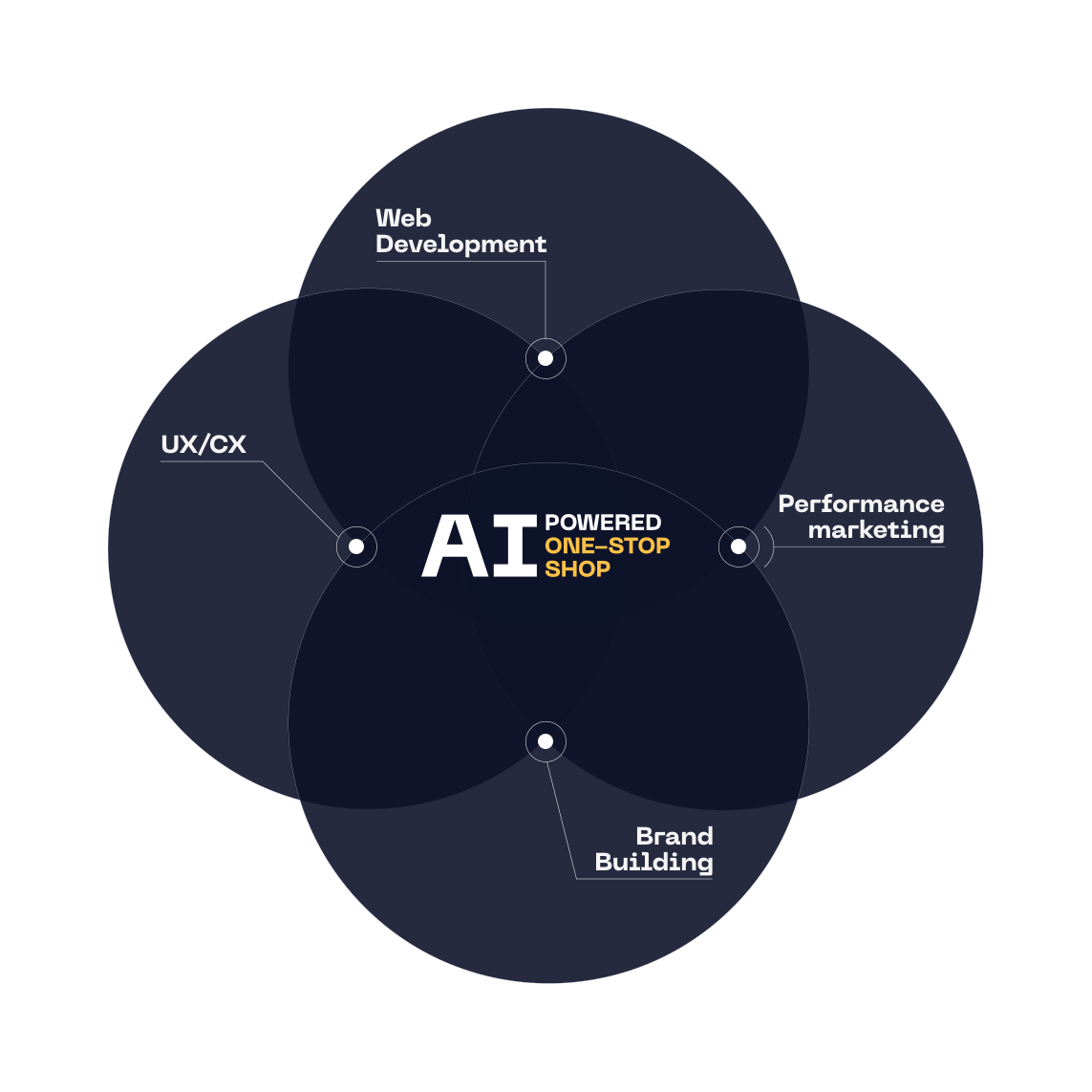
Even the best visual identity alone doesn't guarantee growth. The brand must work everywhere the customer encounters it - from advertising to shopping in the e-shop.
An example is Poni Veni, for which ui42 created a visual identity and a new e-shop and oversees performance marketing. The connection of teams helped reveal a problem before launch. The UX designer pointed out that some new colors didn't have enough contrast and therefore didn't meet accessibility requirements. The identity could thus be adjusted in time.
Poni Veni is growing year-on-year, and the joint project won an award in the Czech WebTop100 competition. However, Adam Hudeček reminds us that success cannot be attributed only to the new brand: "It's not the merit of branding, it's also the merit of branding." Results come from the combination of a strong brand, a quality e-shop, and well-set campaigns.
What can you do today?
- When building or changing a brand, also think about the website, customer experience, and marketing campaigns.
- Ensure that creativity, UX, development, and marketing collaborate from the start of the project.
Step 7: Use AI as a Tool, Not as a Conductor
Is it enough to write a good prompt and AI will create the entire ad? In practice, according to Adam Hudeček, it's not that simple.
"I wish," he responds to the idea that creatives today only give commands to artificial intelligence. AI can quickly create images, texts, or videos, but it still needs a good idea and a person who can assess the result.
Artificial intelligence should help the brand, not determine its direction. "The conductor chooses what to use and what not," Adam explains.
And beware of a message conflict: "The message that I value human work can be ruined by making it inhuman work." However, AI can also support the message, for example, with an interactive banner where the customer changes the product color.
What can you do today?
- For each AI output, consider whether it aligns with your brand's values and communication.
- Determine who in the company is responsible for a consistent communication style and AI content approval.
Step 8: Don't Measure the Brand Only Through Google Analytics
Google Analytics shows you where orders came from. However, it doesn't tell you the whole story of why the customer decided to buy from you.
Adam Hudeček warns that companies often attribute success to performance campaigns because they see their results directly in numbers. Branding is harder to measure, but it is the brand that builds trust, which influences purchasing decisions.
This is also confirmed by the results of the E-commerce Barometer, which ui42 prepared with the Ipsos agency on a sample of 1,659 respondents from Slovakia and the Czech Republic. When choosing or buying, 57% of Slovaks used AI, but only 30% trust it. Meanwhile, 76% trust family and 68% trust reviews.
"Many e-shops offer the same thing, so small differences decide," Adam explains. Trust and brand awareness can be what convinces the customer.
What can you do today?
- Don't evaluate the contribution of branding only by immediate orders and the last click.
- Also monitor brand awareness, search for its name, direct website visits, and customer reviews.
Step 9: Bet on Humanity
At a time when AI can create almost any image or video, real human work is becoming something special again.
According to Adam Hudeček, some premium brands deliberately use hand-drawn illustrations or stop-motion animations and show customers how their ads were created. "Paying two illustrators is somewhat of a luxury today," he notes.
A human approach can be one of the strongest ways to differentiate from the competition. This applies not only to advertising but also to the customer experience. As Adam aptly compares: "I go to fast food, I'm served by a kiosk. I go to a restaurant, I still have a waiter."
Not every brand has to do everything by hand. It's important to know where personal contact and human creation bring real value to the customer.
What can you do today?
- Show the people behind your brand, their work, and the stories behind the products.
- Consider where a personal approach or handmade creation can enhance your brand's value.
A Strong Brand Doesn't Arise from One Good Idea
Building a brand is not just about a new logo, catchy ad, or using the latest AI tools. It's long-term work with strategy, customer experience, and trust.
As Adam Hudeček reminds us in the podcast, artificial intelligence can significantly speed up creation. However, what customers remember about your brand and whether they trust it still depends on the people behind it.
What does brand creation look like in practice, where do companies most often make mistakes, and what role does AI play in the whole process? Listen to the full interview with Adam Hudeček in the Biznislab podcast.
The Biznislab podcast is prepared by ui42 in collaboration with the SME daily. Hosted by Martin Krupa. The guest of the episode is Adam Hudeček, head of the creative department at ui42.