Slavomíra Vígová from Seyfor: The e-shop is the showcase, ERP is the central brain of the company
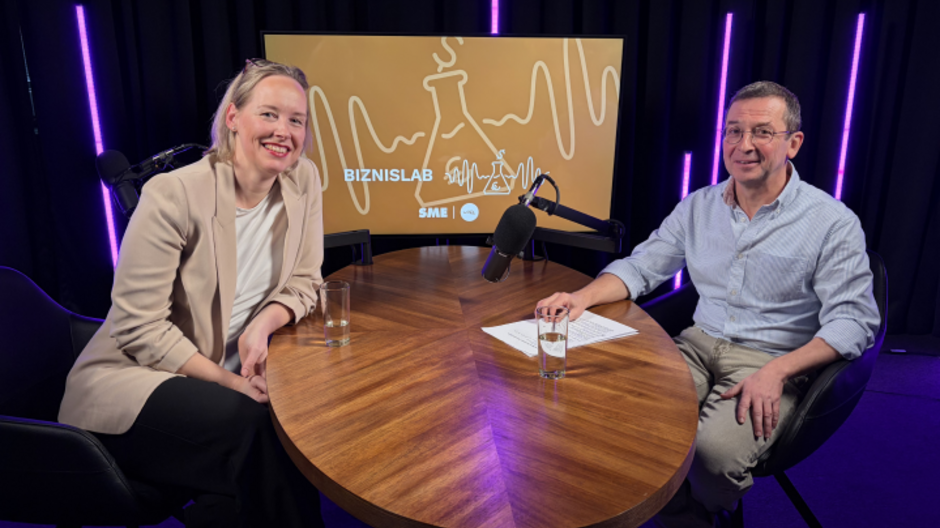
ERP. Three letters that can save a company – or stall it for months if preparation is underestimated. In the latest episode of Biznislab, Martin Krupa talked with Slavomíra Vígová from Seyfor, who is responsible for Money ERP, about why the integration of an e-shop and an ERP system is such a sensitive discipline.
ERP in Three Words: The Central Brain of the Company
Slavomíra begins with a definition that makes immediate sense even to those outside IT and finance. ERP is not just another system. It is the place where all important data converge. Under an ERP system, an ordinary person can imagine a kind of central brain of the company, where all data from individual systems and departments are collected.
In practice, this means that instead of separate tables, papers, and mini-systems in various teams, there is one source of data that holds together finance, inventory, orders, invoicing, payroll, and customer work. Everything is interconnected, and the right hand truly knows what the left is doing.
The E-shop is the Showcase and ERP the Backstage That Must Not Fall
Misunderstandings often arise when connecting an e-shop and ERP. Especially when the project is approached unilaterally, as just an e-shop project, and ERP is considered only a "small" technical detail that will somehow be connected at the end.
Slavomíra Vígová described it in the podcast with a metaphor that perfectly captures reality:
"The e-shop is essentially the showcase. It's the nice thing that the customer encounters... And the goal of the ERP system, if it works correctly, is to process everything in the background."
The e-shop is the customer experience: selection, purchase, notifications, marketing functions, or analytics. ERP is the engine of the company: it manages prices, inventory, invoicing, order processing, and internal processes that must work regardless of what the customer sees on the screen.
Single Source of Truth: Where Should the Truth About Price, Inventory, and Order Be?
One of the most practical parts of the episode was about which data should be where – and why this is not a detail but the foundation of successful integration.
In e-shops, it often happens that logic starts to split between two systems (if not more). Prices are adjusted in the e-shop, inventory is monitored elsewhere, and orders are processed separately. In the short term, this may work, but not in the long term.
"Pricing is a specific topic. The price should be handled directly in the ERP system. Similarly, inventory availability – information on whether I have the goods, don't have them, and in what quantity, belongs under ERP."
It is important to realize that the e-shop is often just one of several sales channels. A company can also sell through B2B trade, brick-and-mortar stores, or marketplace platforms – and each of these paths affects the real state of inventory.
If pricing is managed outside the ERP system, a discrepancy quickly arises between what is accounting correct and what is set for marketing. And these differences later manifest in margin, reports, or customer dissatisfaction.
"A good ERP system handles pricing with ease."
ERP has an overview of purchase prices, discounts, various VAT rates, currencies, or specific conditions for individual markets. It can work with wholesale and retail prices, discount schemes, and individual prices for specific customers.
The e-shop should display this data. Not create it.
Why Integrations Are Delayed: It Doesn't Start with Code, but with a Meeting
When integrating an e-shop and ERP, a technical problem is often sought. In reality, most delays occur even before the first line of code.
Instead of looking for a culprit, Slavka described a simple process that significantly reduces the risk of complications:
- Initial meeting with all 3 parties - the client, e-shop supplier, and ERP supplier jointly clarify expectations, scope, and responsibilities.
- Clear agreement on data and processes – what is transferred, where the truth about data arises, and who is responsible for what.
- Allocated capacities on both sides – not only the agency providing the e-shop solution but also the ERP team must have time reserved for the project.
- Thorough testing – not as a formality before launch, but as a phase where real scenarios are verified and weak points are revealed.
If any of these steps are forgotten, the project begins to slow down. Not because the technology doesn't work, but because coordination and readiness are lacking.
SLA and Capacities: A Few Hundred Euros Can Decide the Deadline
In practice, a common scenario occurs where the e-shop is already nearing launch, being tested, and ERP requests are waiting in the regular support queue.
That's why the podcast opened the topic of SLA and a dedicated consultant. If the integration is to go smoothly, both sides must have capacities – not only the agency but also the ERP supplier.
Guaranteed response times and a specific person on the project often decide whether it launches on time or several weeks later.
More about how SLA works in e-shop development can be found on our separate page.
What Are the Most Common Mistakes Across Projects?
Regardless of the size of the company, two mistakes are repeated.
The first is underestimating the time and involvement of management. ERP is not an "IT project" that can be handed over externally without the company's participation. If the director or responsible people do not find time to define processes and check settings, the system will start, but it will not reflect the reality of the company's operation.
The second common mistake is unprepared data. Incorrect inventory levels, outdated price lists, uncleaned customer databases. The system can import them, but the problem will manifest later – in reports, in margin, or in communication with the customer.
ERP can function only as well as the accuracy of the data that enters it.
Automation vs. AI: Where Artificial Intelligence Makes Real Sense
The podcast also opened the topic of artificial intelligence. And here an important difference was noted.
Automation works on rules: if A, then B. For example, if the variable symbol matches, pair the payment with the invoice.
AI comes into play where rules are not enough – in exceptions, ambiguities, or when looking for patterns in data. A typical example is reading documents from PDFs or predictive sales analyses.
However, a fundamental thing also applies: AI is a tool. Responsibility remains with the company.
Even with automated invoice processing or stock predictions, there must be a person in the process who decides and checks the result.
What to Take Away from the Episode?
If we were to summarize the discussion with Slavomíra Vígová into a few practical recommendations, they would sound like this:
- ERP is not an add-on to the e-shop. It is the basic infrastructure of the company.
- Prices, inventory, and orders should have one source of truth.
- Integration does not start with development, but with a joint meeting and clear division of responsibilities.
- Without allocated capacities on both sides, projects unnecessarily prolong.
- AI can help, but it does not replace managerial decision-making.