AI agents are the next evolutionary step in digital. They are not just "better chatbots" or another analytical tool. They are autonomous systems that can independently work with data, perform analyses, propose decisions, and gradually also execute specific tasks in digital marketing and business.

What is an AI Agent
An AI agent is a software system that has three basic capabilities:
- Sees data – it can read and connect various data sources (analytics, advertising systems, CRM, ERP, CMS).
- Understands context – it doesn't just look at numbers, but at their relationships and development over time.
- Acts – it can propose or execute steps based on what it discovers from the data.
While traditional tools tell you what happened, an AI agent tries to answer the questions why it happened and what to do about it.
Why AI Agents are a Fundamental Change
Digital marketing today generates an extreme amount of data. The problem is no longer their lack, but rather the ability to understand them in context.
A human can track several metrics at once. An AI agent can track thousands.
For example, it can connect:
- advertising spends
- revenue
- margin
- returns
- customer ratings
- customer return rates
- SEO signals
- user behavior on the web
And this is where a new type of value arises: data synthesis that a human cannot manually perform.
What Agents Can Do Today
In the first phase, AI agents primarily have an analytical role. They monitor data and look for hidden patterns.
For example, in one e-commerce project, the agent uncovered a problem that no one noticed. The number of orders was growing thanks to stronger campaigns, so everything seemed healthy. However, at the same time, the number of users abandoning checkout at the delivery step was rapidly increasing.
Analysis showed that since September 2025, the drop in this step increased from approximately 13.2% to 18.3%, which meant thousands of lost orders monthly and a potential revenue shortfall in millions of crowns.
Such a pattern is a typical example of a problem that can easily get lost in traditional reports.
How We Think About It at ui42
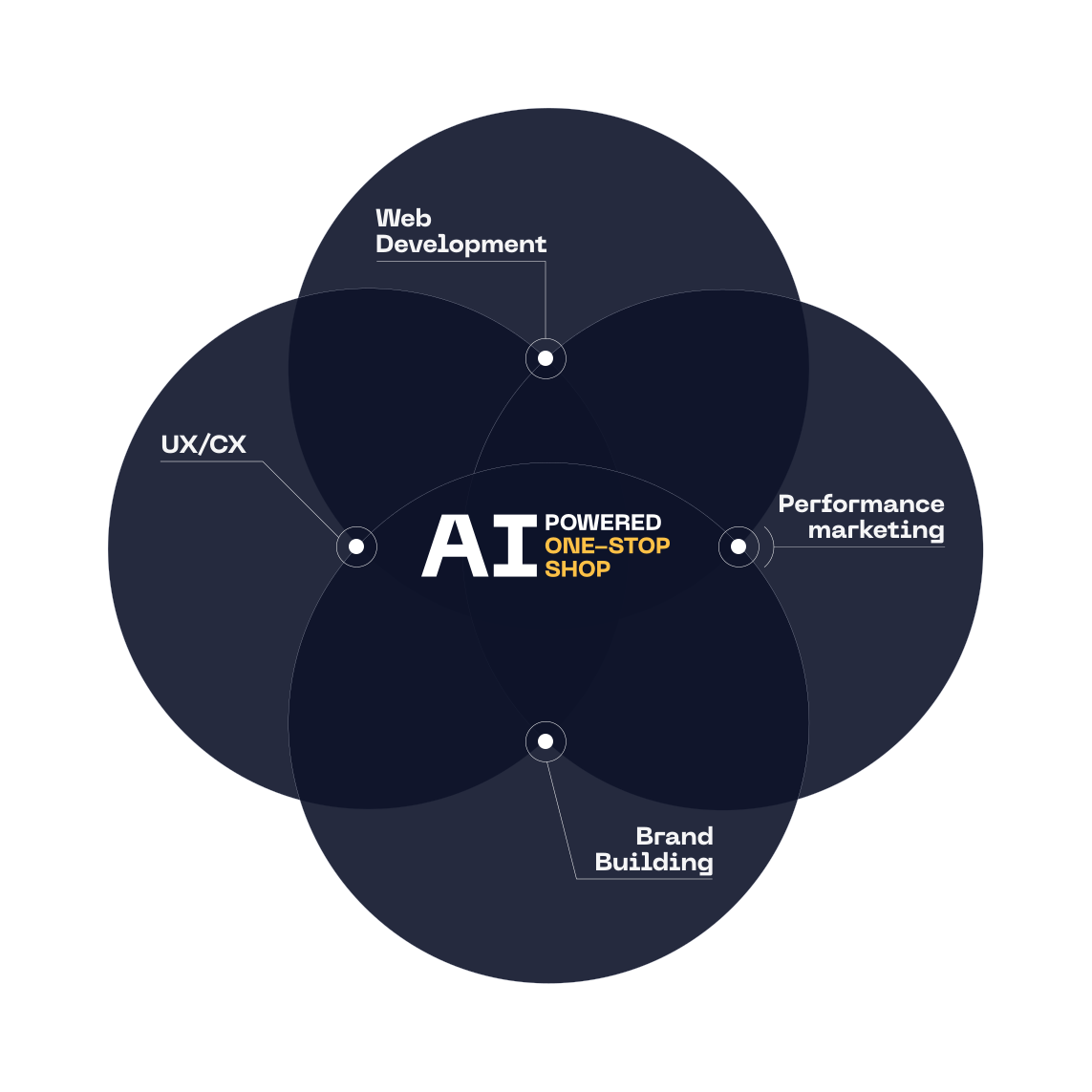
At ui42, we don't look at AI agents as just another tool. We see them as new digital infrastructure.
Digital marketing today consists of dozens of systems – analytics, advertising platforms, CMS, CRM, ERP, email tools, SEO, or product feeds. Each of them produces its own data and reports. The problem is that these systems often don't communicate with each other.
Our ambition is to create an AI layer over this ecosystem.
A layer that:
- connects all available data
- creates a unified view over them
- evaluates the business impact of marketing
- alerts to problems before they manifest in revenue
We want to create a system that can answer questions like:
- Which campaigns generate revenue but destroy margin in the long run?
- Which products sell well but generate the most returns or negative reviews?
- Which marketing channels bring customers who return, and which only bring one-time purchases?
This is the level of data connection that very few teams can manually achieve today.
Agent as a Colleague
Initially, AI agents will function as an analytical colleague.
They will monitor data from tools like GA4, Google Ads or Search Console, evaluate metric developments, and alert to unexpected changes.
Gradually, however, their role will expand.
The agent will not just report a problem.
It will propose solutions.
And over time, it will also execute them.
Where AI Agents are Heading
Today they analyze.
Tomorrow they will manage digital.
In the coming years, they will be able to:
- autonomously manage advertising budgets
- optimize campaigns in real-time
- monitor SEO and technical signals of the web
- connect marketing data with business data
- predict future results
- propose strategic decisions
In other words – the AI agent will be the central brain of digital marketing.
A New Era of Digital
Digital is shifting from the model "people do marketing" to the model "AI manages systems and people manage strategy".
AI agents will essentially be the new infrastructure of digital marketing.
Just as years ago:
- analytical tools emerged
- advertising platforms
- marketing automation
today another layer is emerging.
A layer that connects, understands, and manages all these systems.
And that's where the next chapter of digital begins.
And we at ui42 want to be there at its inception.