Types of Advertising: What Types of Advertising Exist and How to Choose the Right One?
What does it mean
Advertising can take many forms. Sometimes it's a text ad in Google search results, other times it's a banner on a website, a video on YouTube, a post on social media, a billboard by the road, or an advertorial in the media. Therefore, it is important to know the basic types of advertising and to know when each format makes sense.
There is no single type of advertising that is best for every business. The choice depends on the campaign's goal, budget, target audience, stage of the purchasing decision, and the quality of the website to which the ad drives traffic. A different advertising mix will be needed by an e-shop that wants to quickly increase sales, and another by a new brand that first needs to build awareness.
More info
What is advertising and what role does it play in marketing?
Advertising is a paid form of promotion for a product, service, brand, or idea. Its goal is to reach a specific target audience and motivate them to take a certain action — such as visiting a website, filling out a form, making a purchase, registering, or remembering the brand.
Advertising is part of marketing, but it is not the same thing. Marketing encompasses a broader strategy: working with the brand, product, price, distribution, content, analytics, customer experience, and communication. Advertising is one of the tools that helps bring this strategy to people.
The most common goals of advertising include:
- increasing brand awareness,
- generating website traffic,
- generating inquiries or orders,
- supporting the sale of a specific product,
- reaching a new target audience,
- reminding people of a brand they already know,
- supporting the launch of a new product or service.
The campaign goal is one of the most important factors when deciding which forms of advertising to choose.
Basic division of advertising
Advertising can be divided in several ways. The most common division is into online and offline advertising, performance and brand advertising, or push and pull communication.
Online and offline advertising
Online advertising takes place in the digital environment. This includes PPC campaigns, social media advertising, banner advertising, video advertising, native advertising, influencer marketing, or remarketing. Its major advantage is measurability. With well-set measurement, you can track how many people saw the ad, how many clicked, how many users converted, and what results a specific budget brought. Online advertising also allows for more precise targeting based on interests, behavior, location, demographics, or search queries.
Offline advertising uses traditional advertising channels outside the digital environment. This includes TV, radio, print, or outdoor advertising. Its advantage can be a wide reach, strong visual impact, and suitability for local or brand campaigns. On the other hand, it is usually less measurable and often requires higher entry costs.
Performance and brand advertising
Performance advertising is focused on a specific measurable result. This can be a click, a filled form, a call, a registration, an order, or a purchase. A typical example is PPC advertising in search, product campaigns, remarketing, or part of social media advertising.
Brand advertising focuses mainly on building brand awareness, trust, emotion, and long-term preference. It may not immediately bring conversions, but it helps the brand to be remembered and considered later during purchase. Typical formats include video advertising, display campaigns, outdoor, TV advertising, or sponsored content.
In practice, performance and brand advertising often complement each other. Performance campaigns help capture existing demand, while brand communication creates this demand in the long term.
Push and pull advertising
When choosing advertising, it is useful to distinguish between push and pull principles.
Pull advertising responds to existing demand. The user is already searching for something, and the ad offers a relevant solution. A typical example is PPC advertising in search. If someone searches for "accounting for LLC" or "office chairs," the ad appears at the moment when the user has a specific need.
Push advertising reaches out to people even when they are not actively searching for a product or service. This includes social media advertising, display campaigns, video advertising, or outdoor. Push advertising is especially suitable for building awareness, introducing a new offer, or reaching a broader target audience.
Types of online advertising
The online environment offers several advertising formats. Each has different uses, advantages, and limitations. Therefore, when choosing, it is not enough to look only at the cost per click or the popularity of a specific platform. It is important to understand what you want to achieve with advertising.
PPC advertising in search
PPC advertising in Google search is displayed to users based on what they are searching for. Most often, these are ads on Google or other search engines such as Bing or the Czech Seznam. The advertiser usually pays per click, that is, only when the user clicks on the ad.
This type of advertising is especially suitable when there is already demand for a product or service. If people are actively searching for a solution, a PPC campaign can lead them directly to a relevant page.
Advantages of PPC advertising:
- quick campaign start,
- high measurability,
- ability to target specific keywords,
- suitability for performance campaigns,
- flexible budget management.
However, the performance of PPC advertising is influenced by several factors: campaign quality, competition, cost per click, offer, ad text, target page, overall website credibility, and ongoing PPC campaign management. If the ad drives traffic to a weak landing page, results may be worse even with a technically well-set campaign.
Display and banner advertising
Banner advertising is displayed in the form of graphic or responsive banners on websites, in apps, or advertising networks. These can be static banners, animated formats, or visual combinations of images, text, and CTA.
Display advertising is especially suitable for:
- building brand awareness,
- visually presenting a product,
- supporting an action or campaign,
- remarketing,
- reaching users in an earlier decision-making phase.
With banner advertising, it is important not to evaluate success only by immediate sales. Impressions and reach can support brand knowledge, but they may not always be directly reflected in the last click before purchase. Therefore, it is advisable to monitor the broader context, such as assisted conversions, branded query traffic, or overall campaign development.
Social media advertising
Social media advertising allows you to reach users based on interests, behavior, demographics, interactions with the brand, or professional characteristics. The most commonly used platforms are Facebook and Instagram, LinkedIn, TikTok, Pinterest, or YouTube.
For B2C brands, social media can be suitable for visual product presentation, community building, sales support, and remarketing. For B2B companies, LinkedIn advertising may make sense, allowing targeting by job position, industry, or company type.
Social media advertising works well when the brand has a clear message, quality creativity, and can adapt content to the specific platform. Otherwise, advertising on LinkedIn will look different from a short video on TikTok or Instagram.
Video advertising
Video advertising is suitable for brand building, product explanation, working with emotion, or introducing a more complex service. It can be displayed on YouTube, social media, streaming platforms, or advertising networks.
The advantage of video is that it can quickly combine image, sound, movement, and story. This makes it suitable for brand recall and explaining product value. However, it requires quality creativity, a clear point, and good adaptation of the format to the platform.
With video advertising, it is important to work with the first few seconds. The user must quickly understand why they should pay attention to the ad.
Native advertising and sponsored content
Native advertising is a form of advertising that naturally fits into the environment of the medium or platform. This can include sponsored PR articles, recommended content, paid interviews, or expert materials published on a relevant website.
This type of advertising is especially suitable when you need to educate the market, explain a more complex topic, or build trust. Well-crafted sponsored content should not come across as a hard sales text but as useful material that helps the reader better understand the problem.
It is important that paid content is transparently labeled and has real informational value.
Influencer marketing
Influencer marketing is a collaboration with a well-known personality, content creator, expert, or community leader. It can work for products and services where trust, lifestyle, visual presentation, or recommendation from a person perceived as relevant by the audience plays a role.
The advantage of influencer marketing is a more authentic reach and the ability to get the brand into a community that would be harder to reach through traditional advertising. The risk is choosing the wrong influencer, inauthentic communication, or poor measurement setup.
When working with an influencer, it is good to monitor not only the number of followers but also the quality of the audience, engagement rate, creator's reputation, and alignment with the brand.
Remarketing
Remarketing re-engages people who have already visited the website, viewed a product, added an item to the cart, or interacted with the brand. The goal is to remind users who have already shown some interest but have not yet taken the desired action.
Remarketing can be very effective because it works with an audience that already knows the brand. It makes sense for e-commerce, services with a longer decision-making process, and B2B lead generation.
However, sensitivity to frequency and relevance is important. Too frequent or poorly targeted remarketing ads can be disruptive.
Types of offline advertising
Even though a large part of marketing budgets is directed to the online environment, offline advertising still has its place. It can be useful for brand building, regional reach, event support, or in combination with digital campaigns.
TV advertising
Television advertising has a wide reach and strong visual impact. Thanks to the combination of image, sound, and emotion, it is especially suitable for larger brands, mass products, or campaigns with a higher budget. Its disadvantage is higher production and media costs and more challenging measurement of direct impact on sales. Therefore, it is often used more for brand campaigns.
Radio advertising
Radio advertising can work for local or regional campaigns. It is especially suitable when the message is simple, easily memorable, and repeated often enough. It can be used, for example, for promotional events, local businesses, events, or brands that want to strengthen their presence in a specific region.
Print advertising
Print advertising includes advertising in magazines, newspapers, catalogs, flyers, or brochures. Although its importance has declined in many segments, it can still make sense for specific target groups, local offers, or premium print media. Print advertising can also be suitable as a campaign supplement, especially if it is linked to the online environment through a QR code, discount code, or special landing page.
Outdoor advertising
Outdoor advertising includes billboards, city lights, advertising on transport surfaces, banners, directional signs, or other exterior formats. Its advantage is visibility and local reach. It is especially suitable for building awareness, supporting a local campaign, or reminding people of a brand in a specific location. It works best with a simple message, striking visuals, and easily memorable information.
Events, sampling, and personal presentation
Events, sampling, tastings, promotional events, or personal presentations allow direct contact with the customer. They are especially suitable for products that are good to experience or try live. This type of advertising can be effective for food, cosmetics, technology, sports products, or brands that need to build personal experience and trust.
How to choose the right type of advertising?
When choosing advertising, don't start with the question "Which channel is trendy now?", but with the question "What do we need to achieve?" The advertising channel should be based on the goal, budget, target audience, decision-making phase, and website readiness.
If you want to quickly generate inquiries or sales, performance advertising often makes sense, such as PPC campaigns, product ads, remarketing, or social ads. If you need to increase brand awareness, brand communication, video, display, or outdoor advertising may be more suitable.
If you have a visual product and your target audience is active on social media, it is worth considering social media advertising or influencer marketing. For a local service, a combination of local search, Google Business profile, outdoor, or regional radio may work. For B2B companies, a combination of LinkedIn advertising, PPC, expert content, and remarketing may make sense.
Which type of advertising is suitable according to the goal?
Do you need to find out which type of advertising makes the most sense for your business? Contact online marketing experts and have a strategy or advertising campaigns prepared according to your goals, budget, and target audience.
|
Campaign goal |
Suitable types of advertising |
Note |
|---|---|---|
|
Quick inquiries or sales |
PPC advertising, remarketing, social ads |
A quality website and proper conversion tracking are important. |
|
Building awareness |
Display, video, outdoor, PR/sponsored content |
The result may not be immediately reflected in sales. |
|
Local targeting |
Local PPC, radio, outdoor, flyers |
Suitable for businesses, services, and regional campaigns. |
|
B2B lead generation |
LinkedIn advertising, PPC, content campaigns |
The quality of leads is important, not just their number. |
|
Launching a new product |
Video, social ads, influencer marketing, display |
A combination of explanation, creativity, and repetition helps. |
Advantages and disadvantages of online and offline advertising
Both online and offline advertising have their place. The difference is mainly in measurability, targeting, costs, and the way they affect the customer.
Online advertising allows for more precise targeting, faster optimization, and more detailed measurement. You can test different creatives, audiences, texts, and landing pages. The disadvantage can be higher competition, dependence on data, advertising systems, and website quality.
Offline advertising can have a strong reach, local visibility, and credibility with certain target groups. The disadvantage is poorer measurability, higher entry costs, and less flexibility in campaign optimization.
The best results often come not from one isolated channel, but from a well-set marketing mix. Online advertising can capture demand and measure performance, while offline or brand formats can support awareness and trust.
The most common mistakes when choosing advertising
When choosing advertising channels, companies often decide based on trends, recommendations from acquaintances, or what the competition is doing. However, this does not mean that the same channel will work for them.
The most common mistakes include:
- choosing a channel without a clear goal,
- launching advertising without measuring results,
- driving traffic to a weak or unclear landing page,
- too small a budget divided among many channels,
- unclear advertising message,
- lack of differentiation from the competition,
- evaluating brand advertising only by immediate conversions,
- ignoring the longer customer decision-making process,
- poor work with remarketing and re-engaging users.
Advertising is not an isolated island. Its performance is also influenced by website quality, offer, price, brand, credibility, reviews, product availability, overall customer experience, and, last but not least, a quality website that sells.
Examples of advertising combinations by business type
Every business needs a different advertising mix. Below are indicative examples of how individual types of advertising can be combined.
- E-shop - For an e-shop, a combination of PPC advertising in search, product campaigns, remarketing, social media advertising, and email marketing usually makes sense. It is important to work with margin, product availability, seasonality, and quality of product pages.
- Local service. - A local service can use local search campaigns, an optimized Google Business profile, social media advertising, outdoor, or regional radio. The goal is to be visible at the moment when the customer is looking for a solution in a specific location.
- B2B company - B2B companies often work with a longer decision-making process. A combination of PPC campaigns for specific services, LinkedIn advertising, expert content, case studies, remarketing, and email communication may be suitable. In B2B, not only the number of leads is important, but especially their quality.
- New brand - A new brand first needs to explain who it is, what it offers, and why people should trust it. Video advertising, social media, influencer marketing, PR, display campaigns, and gradual content building can help. Performance advertising can then capture the demand that brand communication helps create.
How to find out which advertising works?
Advertising should not be evaluated only subjectively. Before launching a campaign, it is necessary to determine what will be considered a success. For performance campaigns, you can monitor, for example:
- number of conversions,
- cost per conversion,
- return on investment,
- click-through rate,
- conversion rate,
- order value,
- quality of inquiries.
For brand campaigns, other metrics may also be important, such as reach, frequency, brand recall, increase in branded searches, direct traffic, or long-term impact on sales.
Correct evaluation depends on the campaign goal. Not every ad is meant to bring an immediate purchase. Some formats work more with attention, trust, and brand knowledge. Everything depends on marketing strategy.
The best type of advertising depends on the goal
Types of advertising differ according to the environment, goal, format, and way they reach the customer. Online advertising offers precise targeting, quick optimization, and measurability. Offline advertising can help with local reach, building awareness, and supporting the brand.
If you want to generate inquiries or sales, you will probably work with performance channels, such as PPC advertising, remarketing, or social ads. If you need to build a brand, video, display, PR, influencer marketing, or outdoor advertising may have greater significance.
The most important thing is not to choose advertising in isolation. A good result occurs when the advertising channel matches the goal, target audience, budget, and website quality.
Latest news

ChatGPT Ads are here, are you ready?


Who is a design engineer and what do they do? A discipline at the intersection of design and code


When to start preparing Christmas campaigns?


Strategic Digitization of a B2B Company 3/3: Digitization Roadmap for the CEO

Finax Case Study: Digital Transformation of an Investment Platform Built on User Research



Strategic Digitization of a B2B Company 1/3: Why AI is Not the First Step
Google Ads update August 17, 2026: why your performance may drop and how to prepare


Shopify is not the problem. The problem is the perceptions that circulate about it.

The number of steps in the cart does not determine the conversion of the e-shop. This does.
Contact us
Everything for the growth of your business in one place
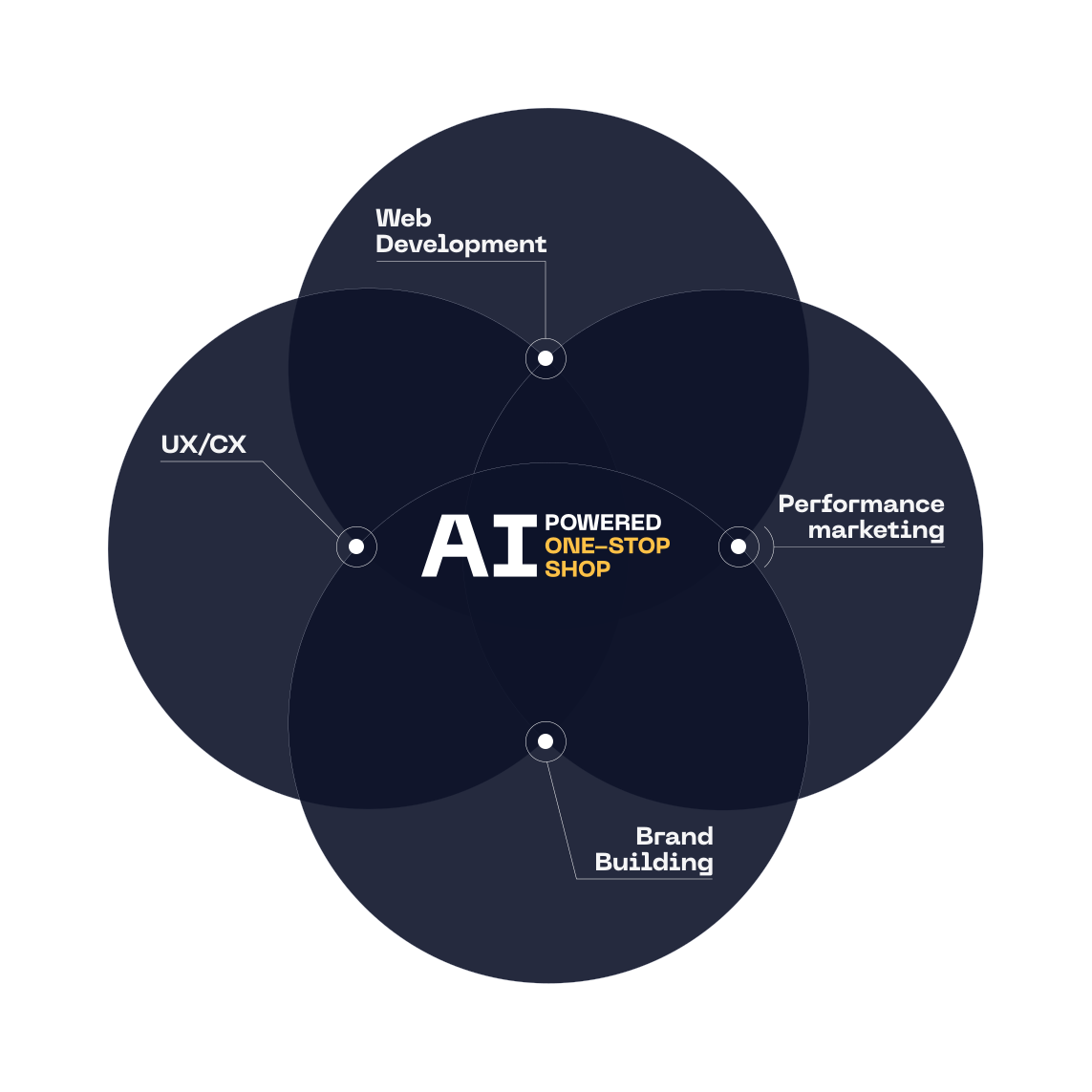
At ui42, we combine strategy, creativity, technology, marketing, and AI into one entity.
We build brands and visual identities, create websites and e-shops, design UX and CRO, create creative content, and deliver measurable results through performance marketing.
Our solutions are enhanced by FLUIDUM – ui42's AI intelligence, which transforms company data into a competitive advantage.
Thanks to this, you gain a partner who can cover the entire digital ecosystem of your business – from the first contact with the brand to conversion.
Don't miss out on the latest news from the world of UX, programming, analytics, and marketing.

Thank you for subscribing!

Get a free consultation
What do you need help with?
Select all options that apply to you
The form has been sent successfully.