What is an AI image generator and how does it work?
What does it mean
AI image generator is a tool that can create an image based on a text prompt. Simply describe what you want to see, and artificial intelligence will generate an illustration, photo, product visual, or graphic in a matter of seconds.
Technology that seemed experimental just a few years ago is now becoming a common part of marketing, design, and content creation. Companies use it for preparing creatives, concepts, product visualizations, or even entire campaigns.
More info
How does an AI image generator work?
Most modern AI generators are based on models that have been trained on a vast amount of images and text descriptions.
Upon entering a prompt – a text instruction – the model analyzes the meaning of words, relationships between objects, and visual context. Based on this, it creates a new image that did not exist before.
For example, if you enter:
"Modern e-shop with minimalist design, photorealistic style"
the model does not pull an existing photo from the internet. It creates a completely new visual based on what it learned during training about the concepts of "e-shop," "minimalism," or "photorealistic style."
The quality of the input often determines the quality of the result today.
Comparison of tools: Midjourney vs. DALL-E vs. Stable Diffusion
Today, there are several AI tools for generating images, each with slightly different uses.
Midjourney: It is among the most popular tools for creatives. It excels in the aesthetic quality of outputs, atmosphere, and details. It is often used in concept creation, branding visuals, or advertising creatives.
DALL-E: The model from OpenAI is known for its simple operation and strong ability to work with precise inputs. An advantage is also the editing of existing images and generating new variants.
Stable Diffusion: An open-source solution that companies can also operate in their own infrastructure. It is popular especially where control over data or the ability to further customize the model is important.
The choice of the right tool depends mainly on whether you are dealing with marketing visuals, internal content production, or your own AI solution.
Legal aspects and copyrights in AI images
Copyrights are among the most discussed topics around AI-generated images.
Legislation in individual countries is still evolving, and the rules are not always clear. It is therefore important to monitor:
- the licensing conditions of a specific tool,
- the way images are used,
- commercial use of outputs,
- possible use of protected brands or persons.
For commercial projects, it is therefore advisable to verify what rights you acquire to the resulting images and whether you can use them without restrictions.
Tips for generating photorealistic visuals
The quality of AI images today depends less on the tool itself and more on the quality of the input.
When creating photorealistic visuals, it helps to:
- be as specific as possible,
- define the environment and atmosphere,
- specify the type of lens or lighting,
- state the style of photography,
- work with references and iterations.
Instead of the input:
"woman at a computer"
it is often more effective to write:
"Photorealistic photo of a marketing manager in a modern office environment, natural light, professional photography, 85 mm lens."
The more precise the input, the closer the result will be to your vision.
Latest news
ChatGPT Ads are here, are you ready?

Who is a design engineer and what do they do? A discipline at the intersection of design and code

When to start preparing Christmas campaigns?

Strategic Digitization of a B2B Company 3/3: Digitization Roadmap for the CEO

Finax Case Study: Digital Transformation of an Investment Platform Built on User Research

Strategic Digitization of a B2B Company 1/3: Why AI is Not the First Step
Google Ads update August 17, 2026: why your performance may drop and how to prepare


Shopify is not the problem. The problem is the perceptions that circulate about it.

The number of steps in the cart does not determine the conversion of the e-shop. This does.
Contact us
Everything for the growth of your business in one place
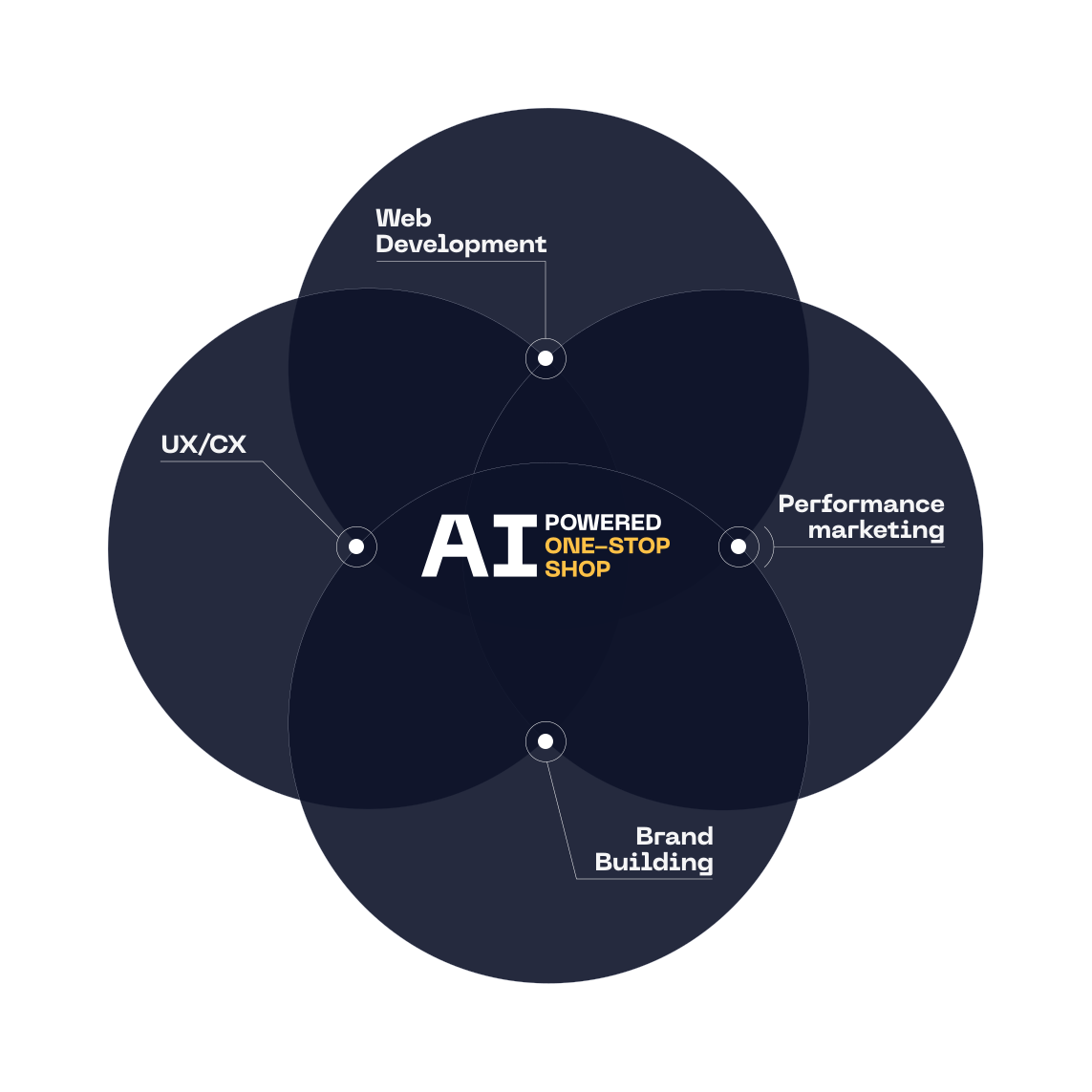
At ui42, we combine strategy, creativity, technology, marketing, and AI into one entity.
We build brands and visual identities, create websites and e-shops, design UX and CRO, create creative content, and deliver measurable results through performance marketing.
Our solutions are enhanced by FLUIDUM – ui42's AI intelligence, which transforms company data into a competitive advantage.
Thanks to this, you gain a partner who can cover the entire digital ecosystem of your business – from the first contact with the brand to conversion.
Don't miss out on the latest news from the world of UX, programming, analytics, and marketing.

Thank you for subscribing!

Get a free consultation
What do you need help with?
Select all options that apply to you
The form has been sent successfully.