E-commerce is undergoing a fundamental transformation. It's no longer just about what you sell, but how your website interacts with each individual visitor. By 2026, the era of static websites that display the same content, the same interface, and the same shopping process for everyone will definitively end.

Today, "spray and pray" no longer applies – where a brand released the same advertising message to the largest possible audience regardless of who it actually interests. Nevertheless, a large part of e-shops still operates on a one-size-fits-all principle – the same interface, the same arguments, the same shopping process for everyone. However, this approach ignores fundamental things - the user's digital history or cognitive habits.
The difference between a 20-year-old student and a 65-year-old pensioner is not just in the content of the cart. It's in how they think, what they trust, and how quickly they make decisions. And this is where the future of websites begins.
The Cognitive Gap Between Generations in Online Shopping
Expert studies increasingly talk about the cognitive gap between generations. Older generations perceive the internet instrumentally – as a tool to accomplish a task. Younger generations perceive it existentially – as a natural environment in which they live.
This gap has a direct impact on UX, CRO, and the overall performance of the e-shop.
Baby Boomers in E-commerce: Trust as a Key Conversion Factor
Baby Boomers (1946 – 1964) are often overlooked but are an extremely strong group. They have high purchasing power but are also sensitive to perceived risk of fraud or technology failure. Unlike younger generations, who trust the "system" and algorithm, Boomers look for a real person behind the code and pixels.
What Does This Mean for UX and CRO in Practice?
- Accessibility as a Business Pillar: With age, there is a natural decline in contrast perception. Minimalist gray text on a white background is not "clean design," it is an obstacle. They require high contrast, clearly defined buttons (not just pictograms), and text that is readable without zooming in.
- Signals of Humanity: A visible support phone number, a physical store address, and security certificates (e.g., Visa Secure, ShopRoku) are key conversion elements for them.
- Elimination of Pressure Psychology: For example, aggressive countdown timers in the cart lead more to anxiety than conversion. Boomers need a calm, predictable environment.
Generation Z: The 8-Second Authenticity Filter
On the opposite end of the spectrum is Generation Z. Digital natives who grew up on TikTok and Instagram have an extremely fast decision-making mechanism. Within seconds, they can evaluate whether content is authentic or just another marketing ploy.
For Gen Z, text is secondary. Their decision-making is visual, non-linear, and strongly influenced by social proof.
How to Optimize Conversions for Gen Z?
- Visual Dominance and Video-First Approach: They need to see the product in motion (so-called snackable content) directly on the product card, in a real context, and ideally through the eyes of other customers.
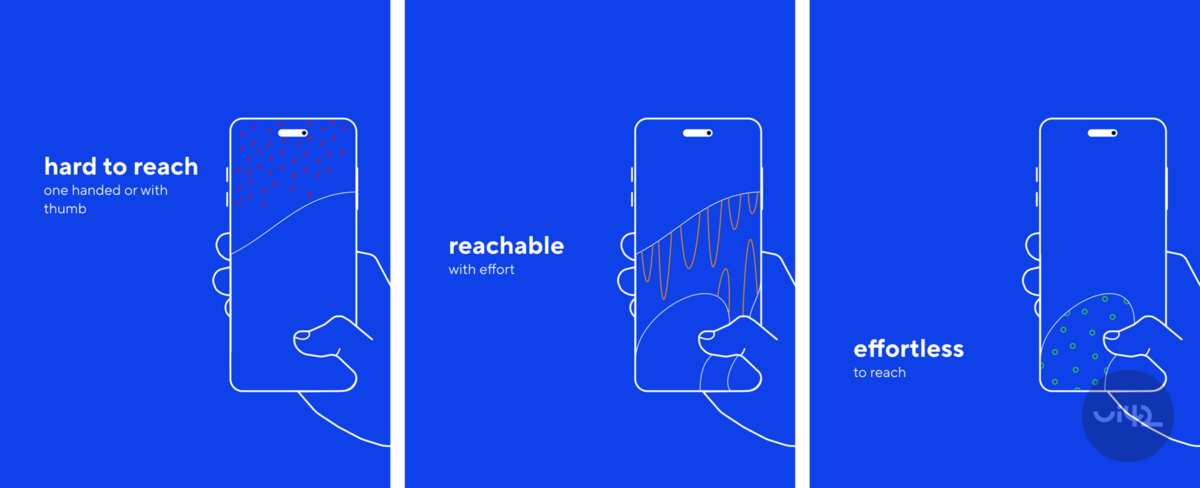
- Mobile-First Ergonomics: Navigation must be designed for the "thumb zone." If you require clicking on tiny elements instead of gestures (swipe, pinch), you lose their interest due to poor ergonomics.
- Social Proof as a Currency of Trust: Reviews must not be hidden. They must be an integral part of the shopping journey. Photos of products from real customers (UGC) have five times higher conversion power for them than professional visuals.
The End of Static Web: The Rise of Morphing UI
The biggest challenge of today's e-commerce is not choosing which generation to adapt to, but understanding that a static web can no longer serve everyone effectively.
The future of conversion optimization (CRO) does not lie in finding a compromise that would satisfy everyone (and thus no one), but in dynamic personalization. And this is where Morphing UI comes in – adaptive interfaces that change in real-time based on user behavior, device, visit source, or digital footprint.
Morphing UI is for some a futuristic vision, but it is a natural evolutionary step for websites, similar to the transition to mobile-first design.
Examples of Adaptive Scenarios in Practice
- Scenario for Seniors: If the system identifies an older user based on scrolling speed and interaction, it automatically enlarges interactive areas, activates a navigation assistant, and visualizes a money-back guarantee.
- Scenario for Gen Z: If a user comes from TikTok via mobile, text blocks are hidden in drop-down menus, video reviews are prioritized, and immediate payment via Apple Pay/Google Pay is offered.
Challenges of Adaptive Websites: SEO, Consistency, and Trust
Morphing UI also brings new challenges – from controlling cognitive load to technical demands on SEO and HTML stability. The future belongs to headless architectures, where AI and data drive interface rendering without disrupting indexability.
A well-designed adaptive website does not feel chaotic. On the contrary – it creates the feeling that the web "understands" the user.
UX as Part of the Product, Not Just Design
As Philip Kotler says, distribution is part of the value proposition. In e-commerce, this is doubly true. UX is no longer just an interface – it is part of the product itself. The customer is not just buying goods. They are buying a sense of security, speed of decision-making, and comfort. If your website cannot bridge the generational and cognitive gap, you are reducing not only conversions but also Customer Lifetime Value. A frustrated senior will not return due to a complicated checkout, and a confused Gen Z representative will leave due to information overload.
This is How Websites Will Work in 2026
The future of e-commerce does not belong to prettier static websites. It belongs to adaptive systems that respect biological limits, digital past, and the context of each user.
Real CRO is not just about technical changes to button color. It is about the ability of the web to adapt, learn from user behavior, and change the way it communicates, navigates, and sells in real-time.
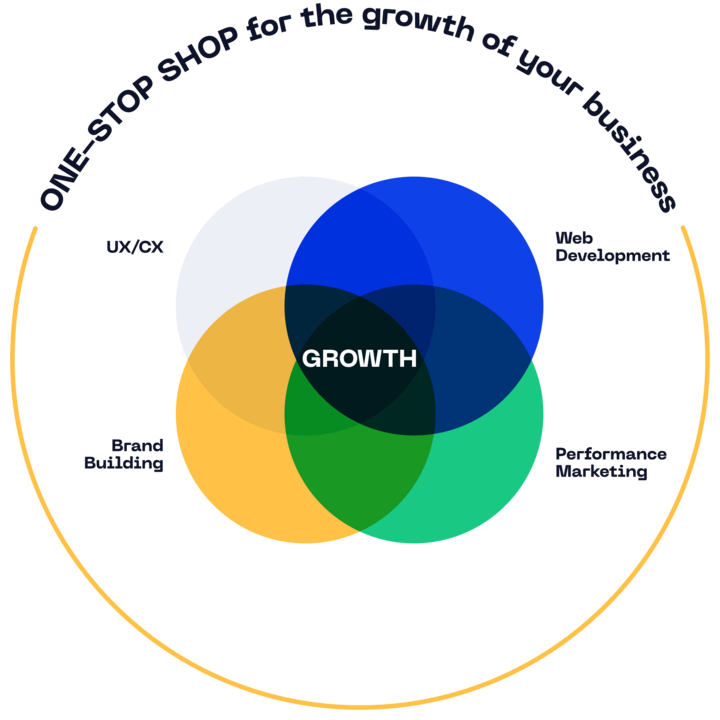
Such an approach requires a complex ecosystem, where development, UX, CX, CRO, marketing, and data pull together.
At ui42, we operate as a ONE-STOP SHOP partner, where our clients find everything needed for growth in 2026 – from developing modern websites and e-shops, through UX and CX design, CRO optimization and marketing campaigns, brand building, to custom AI solutions.