What is remarketing, how does it work, and when is it worthwhile?
What does it mean
Most users do not make a purchase, submit a form, or order a service immediately upon their first visit to a website. Often, they are just browsing products, comparing options, reading reviews, or leaving the decision for later. This is where remarketing comes into play.
Remarketing is a form of online advertising that helps to re-engage people who have already shown interest in your brand, product, service, or content. This could include website visitors, users who viewed a specific product, added items to their cart, read a blog post, or interacted with an ad on social media.
The goal of remarketing is not to chase users with ads at every turn. A properly set up remarketing campaign aims to remind people of a relevant offer at the right time, with an appropriate message and reasonable frequency.
More info
What is Remarketing?
Remarketing is a type of online advertising that re-engages users based on their previous behavior. It most commonly targets people who have visited a website, app, specific category, product page, or performed another important action.
A simple example: a user looks at running shoes in an online store but doesn't make a purchase. Later, while browsing the internet, social media, or videos, they may see an ad reminding them of the product or a similar offer.
Remarketing is often used in PPC advertising, Google Ads, Meta Ads, display campaigns, video advertising, or on social networks. It works best when it is part of a broader online marketing strategy, not as an isolated campaign without a clear goal.
Remarketing vs. Retargeting: Is There a Difference?
The terms remarketing and retargeting are often used interchangeably in practice. Both refer to re-engaging users who have already interacted with the brand in some way.
Sometimes, remarketing is mainly associated with Google Ads and working with custom audiences, while retargeting is used as a more general term for re-targeting users based on their behavior. However, in common marketing practice, this is not a difference that is crucial for most clients.
More important than terminology is understanding the principle: the user already knows the brand, has shown some interest, and the ad tries to remind them in a relevant way.
How Does Remarketing Work?
Remarketing works based on user behavior data. This data can come from a website, app, advertising system, analytics tool, or customer data, if obtained and used in compliance with regulations.
Data Collection and Audience Creation
When a user visits a website and performs a certain action, an advertising or analytics tool can add them to an audience. This could be, for example, visiting a specific URL, viewing a product, adding to a cart, submitting a form, or reading an article.
It is important not to lump all visitors into one list. A user who read a general blog article is in a different decision-making phase than someone who added a product to their cart. Therefore, remarketing audiences should be segmented by value, interest, and stage of the purchasing process.
Advertising Systems and Ad Display
Remarketing audiences can be used in various advertising systems. Most commonly, these include Google Ads, Meta Ads, LinkedIn Ads, YouTube, display networks, or other advertising platforms.
Ads can be displayed in the form of banners, text ads, videos, product ads, or social media posts. The success of the campaign depends on whether the ad is relevant, has a clear call to action, and is not shown to the user too often.
Cookies, Consent, and Privacy Protection
Remarketing works with user data, so it must comply with cookies rules, user consent, advertising platform settings, and applicable legislation. Companies should have a properly set up cookie banner, consent mode, privacy policy, and method of transferring data to advertising systems.
In this topic, it is important not to use simplified legal claims. Generally, if a company uses remarketing or personalized advertising, it should check the technical and legal settings of data collection. Additional restrictions may apply to sensitive segments, small audiences, or regulated industries.
When Does Remarketing Make Sense?
Remarketing makes sense especially when users need more contact with the brand before making a conversion. This is common for online stores, more expensive products, B2B services, financial products, software, education, or services with a longer decision-making process.
Remarketing may be suitable in the following situations:
- the website has sufficient traffic,
- users often do not purchase on their first visit,
- the online store deals with abandoned carts,
- customers view products but do not order,
- the service has a longer decision-making process,
- the brand wants to encourage visitors to return to the website,
- the company wants to work with an audience of blog readers or advisory content,
- a seasonal promotion, event, or time-limited offer is taking place.
On the other hand, remarketing may not yield good results if the website has very low traffic, poorly set up measurement, weak landing pages, or an unclear offer. Advertising cannot long-term save a problem that arises at the level of product, price, website, or brand credibility.
Main Types of Remarketing
Remarketing is not a one-size-fits-all format. There are several types of campaigns that differ based on the data source, advertising system, creativity, and campaign goal.
- By Content of the Ad
- Dynamic Remarketing: Automatically creates tailored ads with goods or services that the person previously viewed but did not immediately purchase.
- Static (Standard) Remarketing: Shows uniform and pre-designed graphic banners or text ads to all people who have ever visited your site.
- By Platform and Channel
- Display and Video Remarketing: Targets the audience using image formats in partner web networks or through video content on streaming platforms.
- Social Media Remarketing: Reminds the audience on networks through sponsored posts, product galleries, or surveys.
- Email Remarketing: Responds to an unfinished order by sending a message to the inbox to bring the person back to the shopping cart.
- By Search and Behavior
- RLSA (Remarketing Lists for Search Ads): Adjusts texts and click prices in text search for those who have already been on your site and are searching for related terms again.
- Sequential Remarketing: Gradually doses advertising messages over time based on the decision-making step the potential customer is in.
How to Set Up a Remarketing Campaign?
A remarketing campaign should not start with creating banners but with defining the goal and audience. Otherwise, there is a risk that the ad will be shown to people who have already visited the website but will not have a clear logic.
1. Define the Campaign Goal - First, clarify what the remarketing should achieve. It could be returning to the cart, completing an order, submitting a form, registration, returning to content, repeat purchase, or supporting decision-making for a more expensive service.
2. Check Measurement - Without measurement, it is impossible to know if remarketing is working. Check tags, pixels, conversions, GA4, Google Ads, Meta Pixel, consent mode, and correct data transfer. It is important to measure not only clicks but also real conversions and their value.
3. Create Audience Segments - Audiences should be based on user behavior. You can work separately with visitors to categories, product pages, cart, blog, contact pages, price list, or users who have already converted.
4. Set Exclusions - One of the most common mistakes is showing the same ad to people who have already purchased or submitted a form. Exclusions help reduce budget waste and improve user experience.
5. Prepare Relevant Creatives - The creative should match what the user has already done. A blog visitor needs a different message than someone with an abandoned cart. In remarketing, reminding of value, credibility, reviews, availability, shipping, or the next step often works.
6. Set Frequency and Time Windows - Remarketing can be effective but also annoying. Therefore, work with the frequency of display and the length of membership in the audience. For an abandoned cart, a shorter window may be relevant, while for a B2B service with long decision-making, a longer period may make sense.
7. Evaluate Results in Context - Do not evaluate remarketing only by the last click. Monitor conversions, cost per conversion, ROAS, assisted conversions, frequency, reach, performance of individual segments, and quality of acquired inquiries.
Segmentation of Remarketing Audiences
Remarketing is not a single universal audience. The more precisely you divide users based on behavior, the more relevant message you can show them.
|
Audience |
Usage |
Recommended Message |
|---|---|---|
|
All website visitors |
Broader brand or service reminder |
Remind the main value of the brand, not just a discount. |
|
Visitors of a specific category |
More relevant campaigns based on interest |
Show products, services, or benefits of the category. |
|
Users who viewed a product |
Dynamic remarketing or product detail reminder |
Remind the product, benefits, availability, or reviews. |
|
Abandoned cart |
Complete the purchase |
Remove the barrier: shipping, availability, trust, easy completion. |
|
Converted users |
Exclusion or cross-sell/upsell |
Do not show the same action; offer a complementary product or next step. |
|
Blog or advisory content visitors |
Education and gradual transition to service |
Offer follow-up content, case study, or consultation. |
Common Mistakes in Remarketing
Remarketing can seem very simple, but that's why mistakes are often made. The biggest problem is often too general settings without a strategy.
Common mistakes include:
- too general audience without segmentation,
- showing the same banner to all users,
- too high ad frequency,
- missing exclusion of customers after purchase or form submission,
- launching a campaign without properly set conversions,
- bad or outdated product feeds in dynamic remarketing,
- too small audiences without sufficient reach,
- ignoring user consent, cookies, and personalized advertising rules,
- evaluating the campaign only by immediate conversions.
Good remarketing is not about the user seeing the brand everywhere. It's about delivering a relevant message at the moment when it can help them decide.
How to Evaluate Remarketing?
Evaluating remarketing depends on the campaign goal. Different metrics will be important for an online store, different for a B2B service, and different for a brand campaign.
For e-commerce campaigns, monitor mainly:
- conversions,
- cost per conversion,
- revenue,
- order value,
- ROAS,
- performance by product segments,
- return of users to the cart.
For lead generation campaigns, monitor:
- number of inquiries,
- cost per lead,
- lead quality,
- form completion rate,
- performance of individual audiences,
- assisted conversions.
For brand and educational campaigns, the following may also be important:
- reach,
- frequency,
- click-through rate,
- engagement,
- return to the website,
- repeat visits,
- moving users to the next step.
Remarketing can have a different impact in a short purchase cycle of an online store and a different one for an expensive B2B service. Therefore, it is important to choose metrics based on the campaign goal, not according to a universal template.
Remarketing as Part of an Online Marketing Strategy
Remarketing should not function separately from other activities. It brings the best results when it follows PPC advertising, SEO, content, social networks, email marketing, web analytics, and a quality landing page.
For example, an SEO article can bring a user to the website in the information-gathering phase. Remarketing can then lead them to a case study, solution comparison, or consultation. PPC advertising can capture the user in the active search phase, and remarketing reminds them of the offer if they don't decide immediately.
Latest news

ChatGPT Ads are here, are you ready?


Who is a design engineer and what do they do? A discipline at the intersection of design and code


When to start preparing Christmas campaigns?


Strategic Digitization of a B2B Company 3/3: Digitization Roadmap for the CEO

Finax Case Study: Digital Transformation of an Investment Platform Built on User Research



Strategic Digitization of a B2B Company 1/3: Why AI is Not the First Step

Google Ads update August 17, 2026: why your performance may drop and how to prepare


Shopify is not the problem. The problem is the perceptions that circulate about it.

The number of steps in the cart does not determine the conversion of the e-shop. This does.
Contact us
Everything for the growth of your business in one place
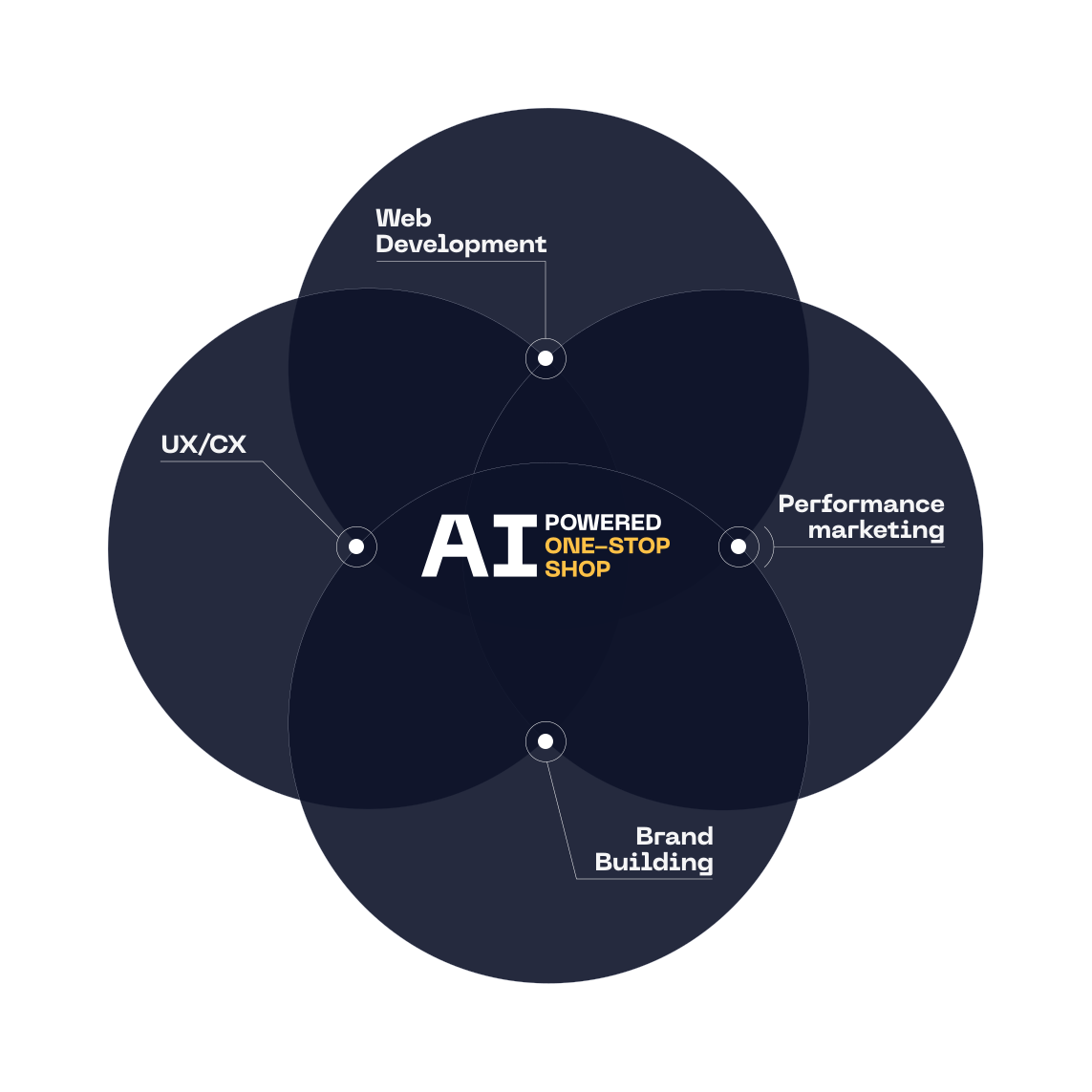
At ui42, we combine strategy, creativity, technology, marketing, and AI into one entity.
We build brands and visual identities, create websites and e-shops, design UX and CRO, create creative content, and deliver measurable results through performance marketing.
Our solutions are enhanced by FLUIDUM – ui42's AI intelligence, which transforms company data into a competitive advantage.
Thanks to this, you gain a partner who can cover the entire digital ecosystem of your business – from the first contact with the brand to conversion.
Don't miss out on the latest news from the world of UX, programming, analytics, and marketing.

Thank you for subscribing!

Get a free consultation
What do you need help with?
Select all options that apply to you
The form has been sent successfully.