
If you operate an online store and sell to consumers, an important change awaits you from June 19, 2026.
The amendment to the Consumer Protection Act introduces the obligation to allow customers to withdraw from the contract directly online. The previous model, where only a downloadable PDF form and an email address for sending it were available on the website, will no longer suffice.
For most Eu online stores, this means adjusting the website, customer account, and internal processes.

What is changing?
Until now, a customer could withdraw from a contract, for example, by email or by sending a completed PDF form.
From now on, the e-shop will also have to have an online form available, which will allow the withdrawal to be processed directly on the website.
This new law applies to all e-shops - regardless of whether you sell physical goods, services, or digital content.
What will you need to add to your e-shop?
The new rules do not only concern the form itself. In practice, it will be necessary to ensure the entire process. On the website, you must now have:
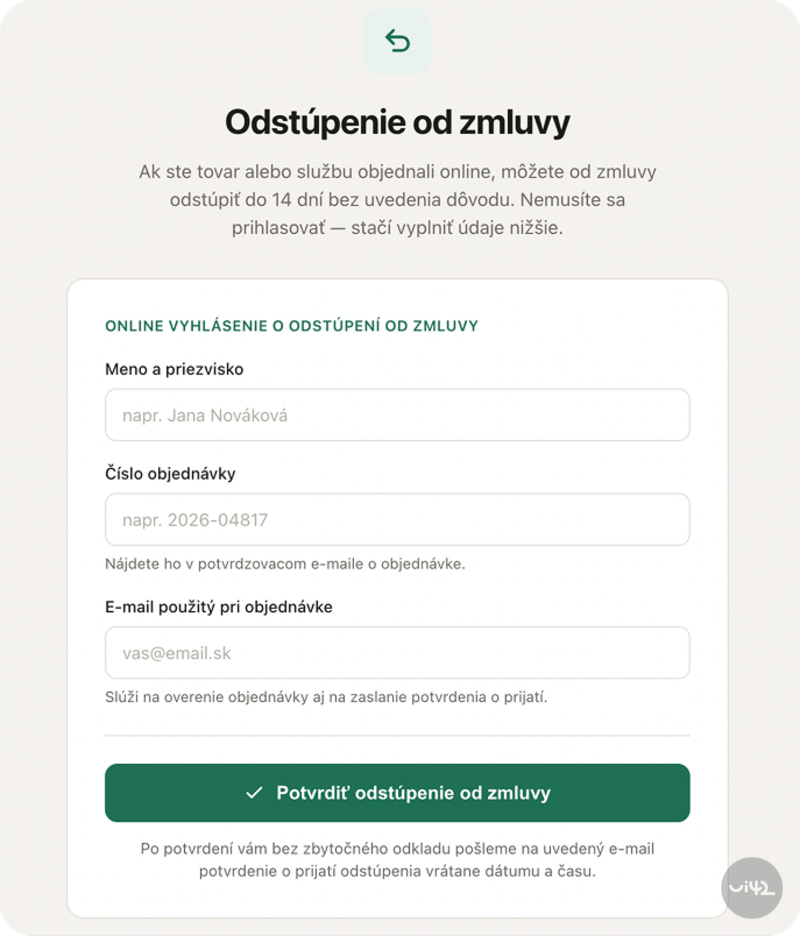
1. Online withdrawal form
The customer must be able to fill out and submit the withdrawal directly on the website. A PDF document or a link to an email is no longer sufficient.
2. Pre-filled data for logged-in customers
If the customer is logged into their account, the form should automatically work with the order data:
- name and contact details,
- order number,
- order date,
- ordered products.
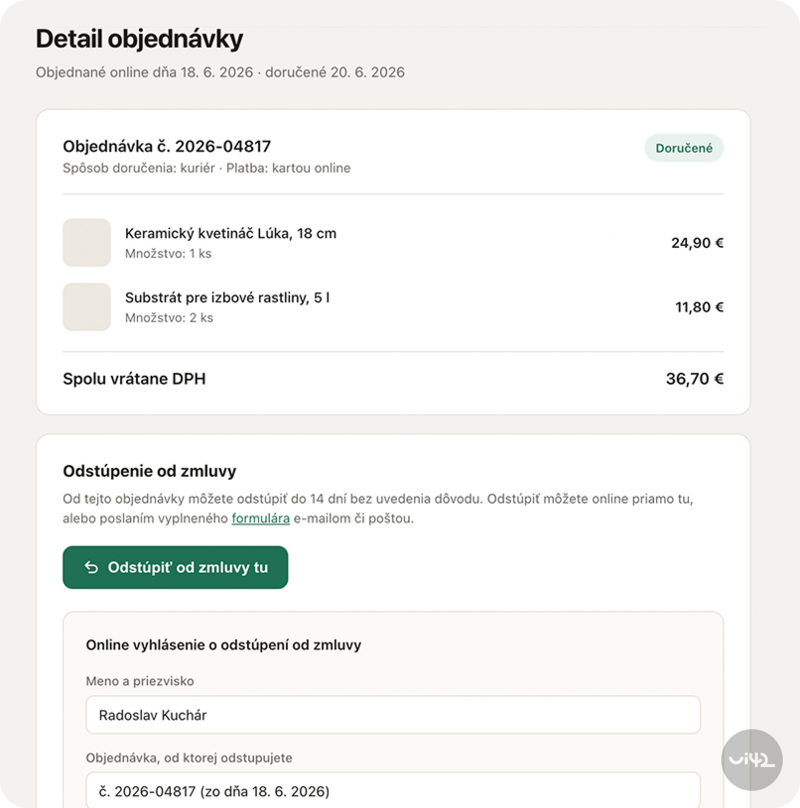
The goal is to simplify the entire process as much as possible.
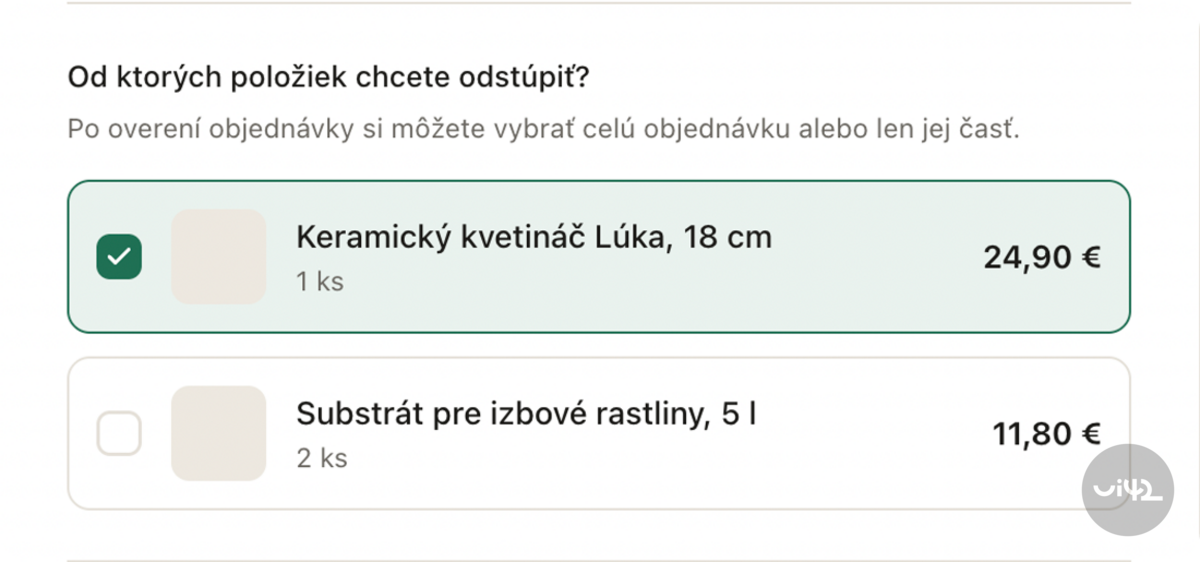
3. Selection of specific items
If the customer is returning only part of the order, they should be able to mark specific products. The law does not require this, but without it, you will receive withdrawals in the style of "returning part of the order". Reduce the number of ambiguities when processing returns.
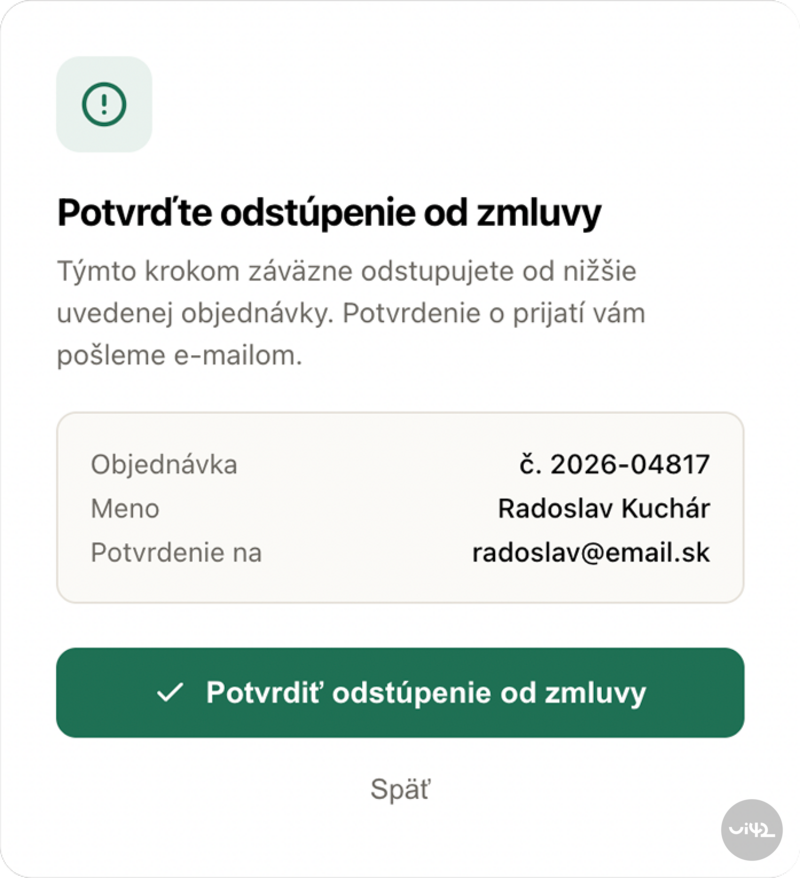
3. Confirmation before sending
Before final submission, the customer must see a summary of their withdrawal and confirm it.
This step helps prevent mistakes and unnecessary disputes.
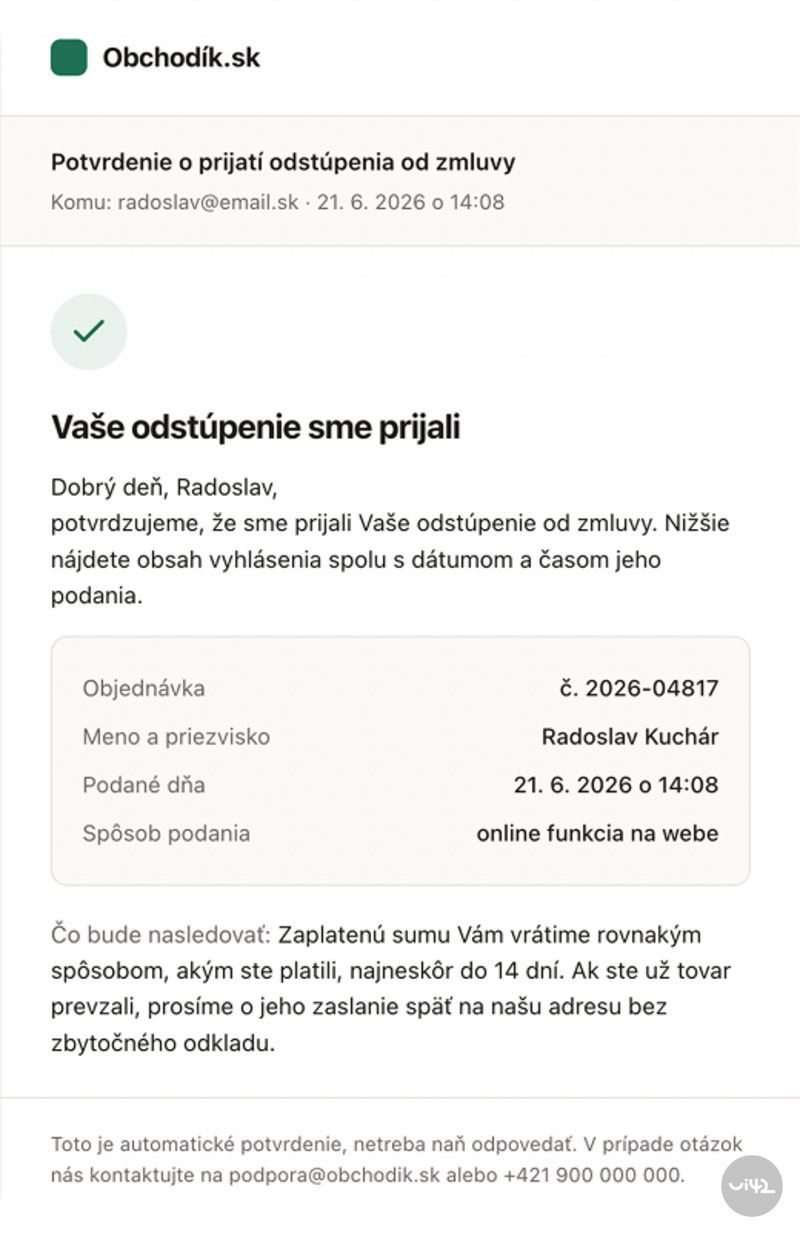
5. Automatic confirmation email
After submission, the customer must receive confirmation that the withdrawal has been received.
The email should contain:
- date of receipt,
- list of returned items,
- further instructions,
- information about the refund.
It is not enough to just modify the form
Many e-shops will also need to update:
- general terms and conditions,
- withdrawal instructions,
- customer section,
- links in the website footer.
The new functionality must be easily accessible, and the customer must be able to find it without unnecessary searching.
Who is exempt from the obligation?
Exceptions mainly apply to:
- purely B2B e-shops (if you sell only to businesses (invoices with VAT ID, no B2C sales),
- custom-made personalized goods,
- perishable goods,
- goods in protective packaging that are not suitable for return after opening,
- digital content after delivery,
- newspapers and magazines (except subscriptions),
- audio and video recordings and computer software in protective packaging, if the packaging has been breached.
Please note: if you operate a combined B2B and B2C e-commerce store (typically a wholesale business that also allows purchases by end consumers), this obligation applies to you as well. When a B2B customer clicks on the form, it is sufficient to display an informational notice explaining that this option is intended for end consumers only.
What are the potential penalties?
For non-compliance, the supervisory authority may impose a fine from €200 up to 2% of the company's turnover, but not exceeding €200,000.
What do we recommend doing now?
Although the deadline may seem distant, for larger e-shops, it is not just about adding one form.
The change affects:
- frontend,
- customer accounts,
- order system,
- email communication,
- withdrawal records,
- legal documentation.
Therefore, we recommend starting with the analysis of the solution well in advance.
Summary
From June 19, 2026, most Slovak e-shops will have to allow customers to withdraw from contracts directly online.
If you are currently using only a PDF form or email communication, you will likely need to adjust your website and processes. The sooner you start preparing, the easier the implementation will be without last-minute stress.