What are React Server Components?
What does it mean
React Server Components (RSC) are an architectural concept in React that allows selected components to be rendered directly on the server without sending their JavaScript to the web browser. The goal is to reduce the amount of JavaScript transferred, speed up page loading, and work more efficiently with data on the server.
Unlike classic React components, Server Components are executed exclusively on the server. The result is not JavaScript intended for the browser, but a pre-prepared output that React sends to the client along with the information needed to display the user interface.
More info
React Server Components as a New Approach to Rendering
For many years, React applications primarily operated on the principle of Client-Side Rendering, where the browser first downloads the application's JavaScript and only then creates the resulting user interface.
Server-Side Rendering (SSR) accelerated this process by generating the HTML page on the server before sending it to the user.
React Server Components address a different part of the problem.
Instead of transferring all components to the browser, they allow part of the application to remain exclusively on the server. Thus, JavaScript of components that do not require interactivity is not sent to the client.
The result can be a smaller volume of data transferred, faster application loading, and lower performance demands on the user's device.
How Does Data Handling on the Server Work Without Unnecessary JavaScript?
One of the main advantages of React Server Components is the ability to work with data directly on the server.
A Server Component can load data from a database, API, or other source before rendering. Since it is executed exclusively on the server, there is no need to send code for data retrieval or sensitive application logic to the browser.
This approach brings several advantages:
- smaller volume of JavaScript sent to the browser,
- faster page loading,
- simpler access to databases or internal APIs,
- higher security, as server code does not leave the server.
Interactive parts of the application, such as forms, filters, or user interfaces responding to clicks, remain implemented as Client Components.
Server Components, SSR, and Client Components: Main Differences
Although these terms are often confused, they address different tasks.
| Approach | Where it is executed | Is JavaScript sent to the browser? | Typical use |
|---|---|---|---|
| Server Components | server | only for Client Components | data loading, static interface parts |
| Server-Side Rendering (SSR) | server | yes | quick HTML display on first visit |
| Client Components | browser | yes | interactive user interface |
Server Components therefore do not replace SSR. React designed them to complement each other. SSR addresses the delivery of HTML to the user, while Server Components reduce the amount of JavaScript needed to render the application.
When Are React Server Components Worth It?
React Server Components bring the most benefit to applications that work with large volumes of data or contain extensive user interfaces.
They are suitable for example for:
- e-commerce platforms,
- administrative systems,
- content portals,
- dashboards,
- applications using frameworks like Next.js.
With the right architecture design, they allow combining the advantages of server-side data processing with the interactivity of client components, leading to better application performance and user experience.
Latest news

Phishing website: What to do when someone copies your e-shop?


How to verify an AI prototype before web development


Imunoklub Case Study: Unification of Two E-shops and More Value from Each Visit


ChatGPT Ads are here, are you ready?


Who is a design engineer and what do they do? A discipline at the intersection of design and code

When to start preparing Christmas campaigns?


Strategic Digitization of a B2B Company 3/3: Digitization Roadmap for the CEO

Finax Case Study: Digital Transformation of an Investment Platform Built on User Research


Strategic Digitization of a B2B Company 1/3: Why AI is Not the First Step
Contact us
Everything for the growth of your business in one place
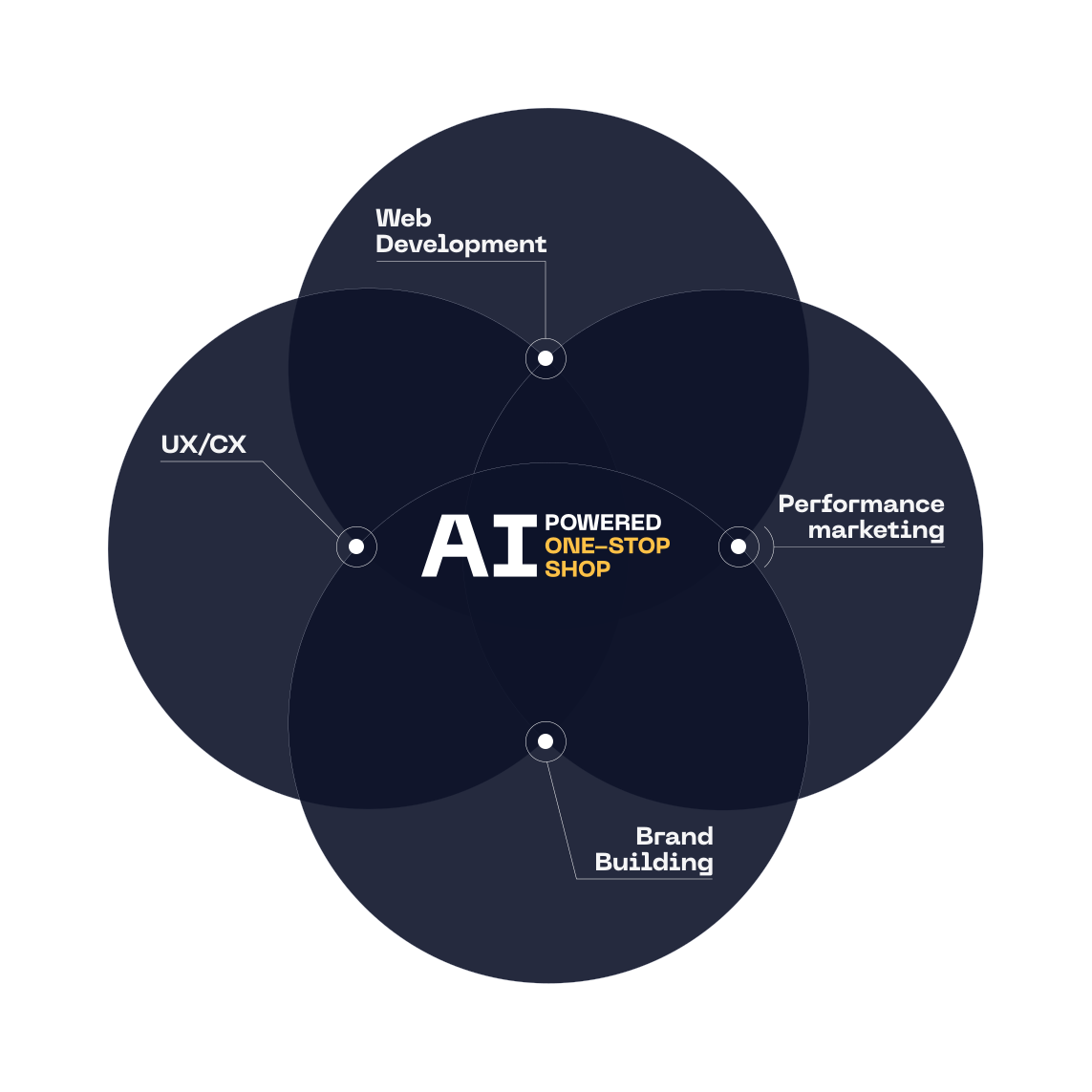
At ui42, we combine strategy, creativity, technology, marketing, and AI into one entity.
We build brands and visual identities, create websites and e-shops, design UX and CRO, create creative content, and deliver measurable results through performance marketing.
Our solutions are enhanced by FLUIDUM – ui42's AI intelligence, which transforms company data into a competitive advantage.
Thanks to this, you gain a partner who can cover the entire digital ecosystem of your business – from the first contact with the brand to conversion.
Don't miss out on the latest news from the world of UX, programming, analytics, and marketing.

Thank you for subscribing!

Get a free consultation
What do you need help with?
Select all options that apply to you
The form has been sent successfully.