What is dynamic pricing?
Veronika VerešováWhat does it mean
Dynamic pricing is a method of pricing where the price of a product changes in real-time based on various factors - such as demand, competition, stock levels, or customer behavior. In other words: the price is not fixed but dynamically adjusts to the market situation.
Dynamic pricing is currently used mainly by e-shops, marketplace platforms, airlines, or booking systems, where the price significantly affects competitiveness and margin.
More info
What is dynamic pricing?
In traditional pricing, a company sets the price manually, and it remains the same for a certain period.
In dynamic pricing, the price can change:
- several times a day,
- automatically,
- according to predefined rules or algorithms.
Factors influencing pricing decisions include:
- current demand,
- competitor prices,
- stock availability,
- seasonality,
- customer behavior,
- product performance.
UI tip: The goal is not just to "be the cheapest," but to find a price that maximizes sales, margin, or profitability.
How do algorithms for dynamic pricing work?
Dynamic pricing today is often driven by automated rules or AI algorithms.
The system continuously evaluates data and adjusts the price based on market conditions. For example, if a competitor lowers the price of a product or demand surges, the algorithm can respond immediately.
For larger e-shops, manual price setting is simply not enough. If you have thousands of products, prices must be optimized automatically and in real-time.
That's why dynamic pricing is closely linked to:
- data analytics,
- ERP systems,
- warehouses,
- marketing,
- and AI solutions.
Advantages and risks of dynamic pricing in e-commerce
The biggest advantage of dynamic pricing is the ability to react to the market faster than competitors.
For e-commerce, this can mean:
- higher margins,
- better competitiveness,
- more efficient stock clearance,
- better demand management.
On the other hand, dynamic pricing also brings risks.
If prices fluctuate too aggressively or unpredictably, customers may lose trust. The situation is particularly sensitive when users feel that prices are "unfair."
Dynamic pricing is therefore not just a technological issue. It is also a matter of strategy, branding, and customer perception.
The psychology of pricing and customer reaction to changes
Price is not just a number. It significantly influences how a customer perceives the value of a product and the brand itself.
People naturally react to:
- discounts,
- time-limited offers,
- the feeling of a good deal,
- price comparisons.
However, if price changes appear chaotic or incomprehensible, they can have the opposite effect - frustration or distrust.
Dynamic pricing works best when it still makes sense to the customer. While technology can optimize the price, the final decision should always consider the customer experience and long-term brand building.
Latest news

Imunoklub Case Study: Unification of Two E-shops and More Value from Each Visit


ChatGPT Ads are here, are you ready?


Who is a design engineer and what do they do? A discipline at the intersection of design and code


When to start preparing Christmas campaigns?


Strategic Digitization of a B2B Company 3/3: Digitization Roadmap for the CEO

Finax Case Study: Digital Transformation of an Investment Platform Built on User Research

Strategic Digitization of a B2B Company 1/3: Why AI is Not the First Step
Google Ads update August 17, 2026: why your performance may drop and how to prepare


Shopify is not the problem. The problem is the perceptions that circulate about it.

Contact us
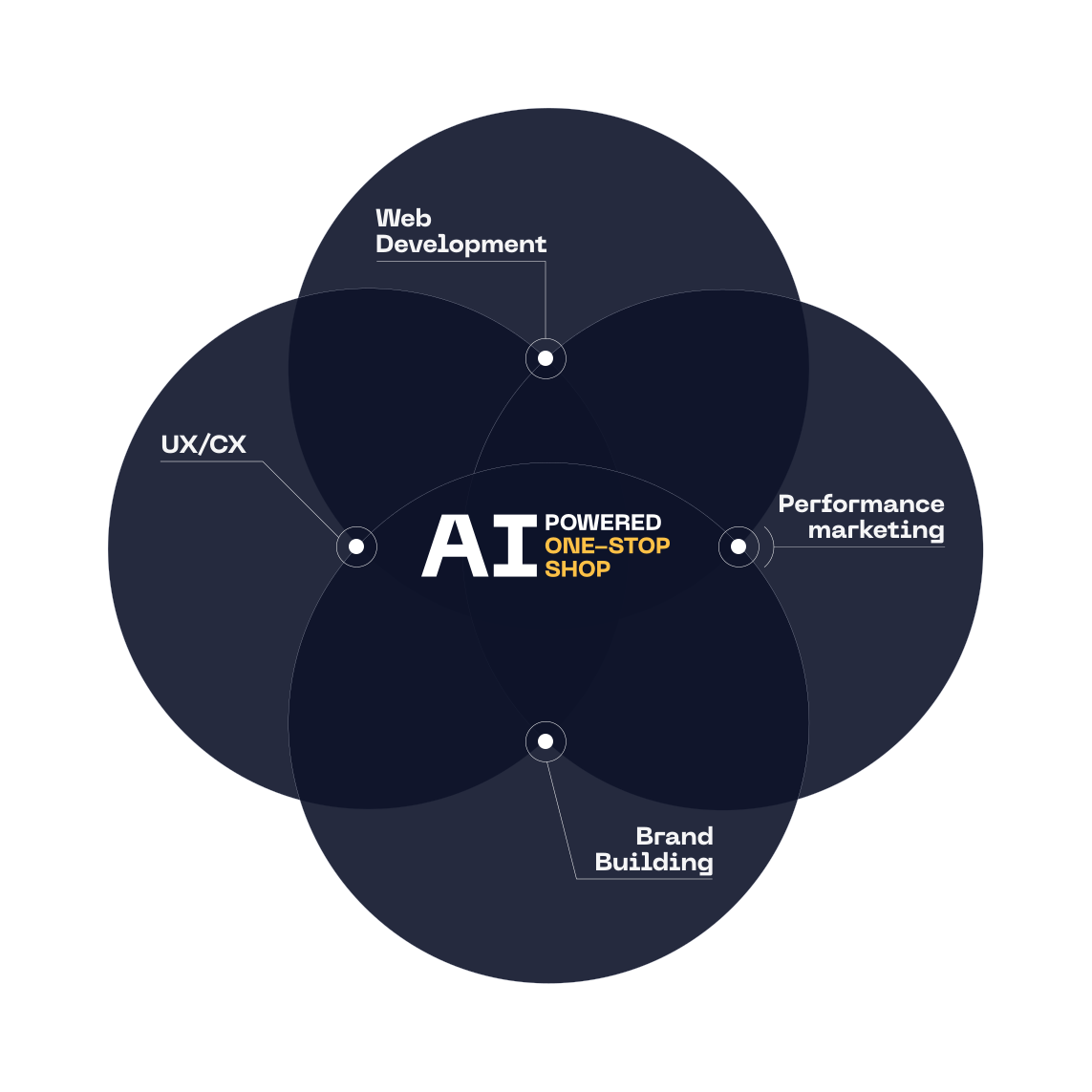
Everything for the growth of your business in one place
At ui42, we combine strategy, creativity, technology, marketing, and AI into one entity.
We build brands and visual identities, create websites and e-shops, design UX and CRO, create creative content, and deliver measurable results through performance marketing.
Our solutions are enhanced by FLUIDUM – ui42's AI intelligence, which transforms company data into a competitive advantage.
Thanks to this, you gain a partner who can cover the entire digital ecosystem of your business – from the first contact with the brand to conversion.
Don't miss out on the latest news from the world of UX, programming, analytics, and marketing.

Thank you for subscribing!

Get a free consultation
What do you need help with?
Select all options that apply to you
The form has been sent successfully.