What are first party data?
What does it mean
First-party data are data that a company collects directly from its customers or visitors to its own channels - for example, from its website, e-shop, application, or newsletter. These are data that the brand owns and collects based on direct interaction with the user. That is why they are among the most valuable types of data in digital marketing.
More info
What are first-party data?
First-party data always originate within the brand's own ecosystem.
They can include:
- purchase history,
- website behavior,
- registration data,
- email databases,
- data from CRM or loyalty programs.
Unlike external data, they have one major advantage - the company knows exactly where they come from and in what context they were created.
That is why first-party data are more accurate, reliable, and strategically valuable in the long term than data purchased from third parties.
The importance of first-party data in the cookieless era
The importance of first-party data is growing significantly, especially due to the gradual restriction of third-party cookies.
Browsers and regulations are increasingly limiting the tracking of users across websites. This changes the way brands work with advertising, personalization, and analytics.
In practice, this means that companies can no longer rely solely on external audiences or third-party cookies. They need to build their own databases and work with data they collect directly.
For e-commerce and digital marketing, first-party data are therefore becoming increasingly important:
- in personalization,
- segmentation,
- marketing automation,
- and performance campaigns.
How to legally and effectively collect your own data?
The collection of first-party data must be transparent and compliant with GDPR.
They are most often collected through:
- registrations,
- newsletters,
- customer accounts,
- forms,
- analytics tools,
- loyalty programs.
However, it is not only important to collect data but also to know why you are collecting it and how you will use it. Companies today often make the mistake of collecting large amounts of data without real use. Much more important than volume is quality, context, and the ability to connect data with real customer behavior.
Differences: First-party, second-party, and third-party data
The difference between the different types of data is mainly in who collects and owns them.
1. First-party data
You collect them directly from your users.
2. Second-party data
These are first-party data from another company, to which you gain access through partnership or collaboration.
3. Third-party data
They are aggregated by external companies and sold to multiple entities. This type of data is gradually losing significance today due to regulations and the restriction of cookies.
For most brands, building quality first-party data is therefore a strategic priority today.
Latest news

Imunoklub Case Study: Unification of Two E-shops and More Value from Each Visit


ChatGPT Ads are here, are you ready?


Who is a design engineer and what do they do? A discipline at the intersection of design and code


When to start preparing Christmas campaigns?


Strategic Digitization of a B2B Company 3/3: Digitization Roadmap for the CEO

Finax Case Study: Digital Transformation of an Investment Platform Built on User Research


Strategic Digitization of a B2B Company 1/3: Why AI is Not the First Step

Google Ads update August 17, 2026: why your performance may drop and how to prepare


Shopify is not the problem. The problem is the perceptions that circulate about it.

Contact us
Everything for the growth of your business in one place
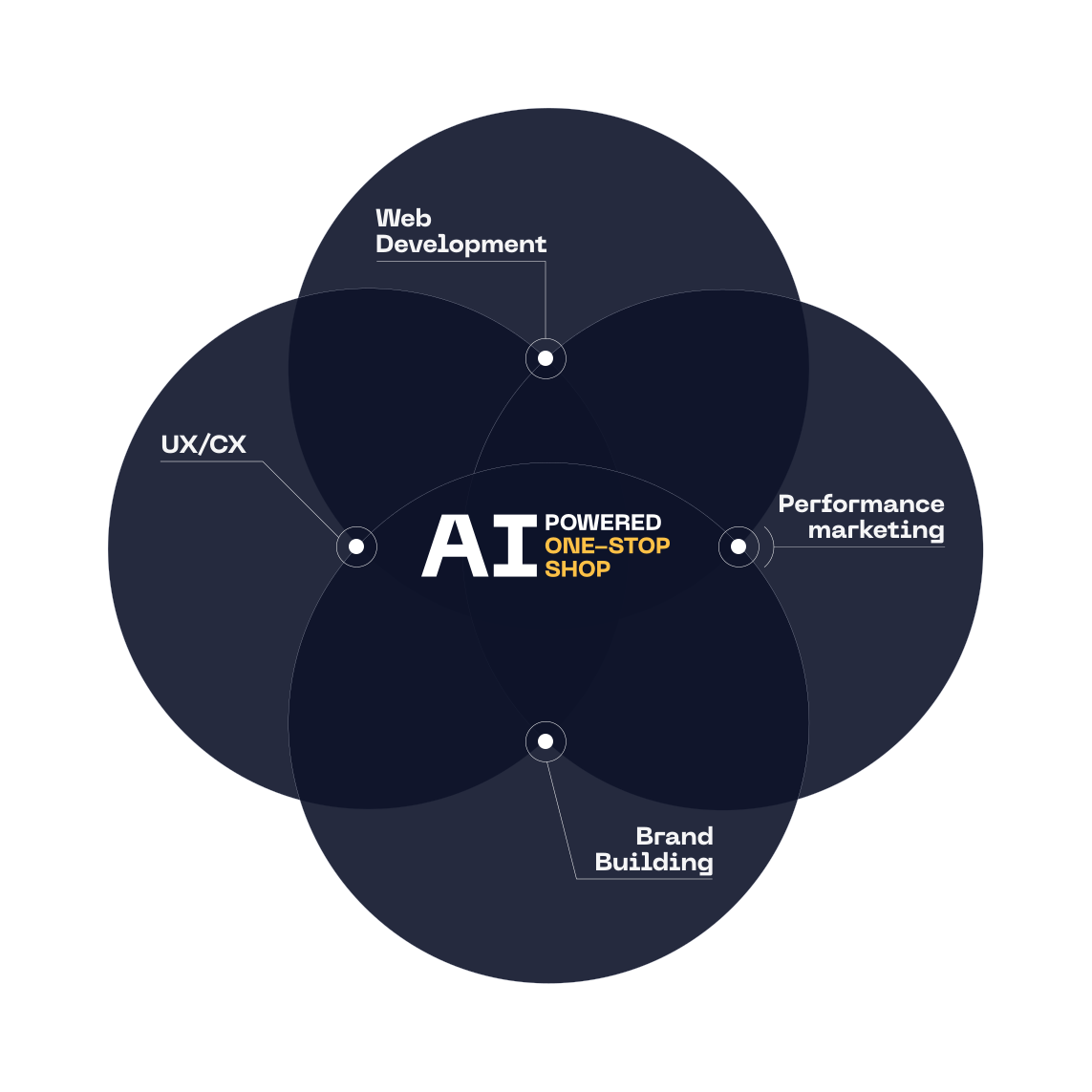
At ui42, we combine strategy, creativity, technology, marketing, and AI into one entity.
We build brands and visual identities, create websites and e-shops, design UX and CRO, create creative content, and deliver measurable results through performance marketing.
Our solutions are enhanced by FLUIDUM – ui42's AI intelligence, which transforms company data into a competitive advantage.
Thanks to this, you gain a partner who can cover the entire digital ecosystem of your business – from the first contact with the brand to conversion.
Don't miss out on the latest news from the world of UX, programming, analytics, and marketing.

Thank you for subscribing!

Get a free consultation
What do you need help with?
Select all options that apply to you
The form has been sent successfully.