What are zero party data?
Veronika VerešováWhat does it mean
Zero party data are data that the customer voluntarily and knowingly provides to the brand. They are not collected "in the background" through cookies or analytics - the user provides them to the company themselves because they expect a better experience, more relevant content, or a personalized offer in return.
This can include product preferences, quiz answers, clothing size, favorite categories, or interests. And that is why zero party data are today one of the most valuable types of data in digital marketing.
More info
What are zero-party data and why are they the most valuable?
Most data in marketing is generated indirectly - the system tracks what the user clicked on, what they viewed, or what they purchased. Zero-party data works differently. The customer tells you themselves.
That is a huge difference.
The brand does not have to guess what interests the person or what they probably want. They receive information directly from them, in context and voluntarily.
That's why zero-party data are:
- more accurate,
- more trustworthy,
- and significantly more usable in marketing personalization.
In an era when third-party cookies are gradually disappearing, they gain strategic importance for brands.
Examples of zero-party data (preferences, quizzes, surveys)
Zero-party data most often arises at moments when the user actively engages in communication with the brand.
Typical examples are:
- product quizzes,
- onboarding forms,
- preferences in the customer account,
- wishlists,
- satisfaction surveys,
- selection of topics in newsletters.
Good brands today do not collect data "just in case." They only ask for what they can realistically use for a better customer experience.
How to motivate customers to share zero-party data?
People do not provide their data just because the brand asks. They need to feel that it brings them something.
It works best when the user immediately sees the value:
- more relevant recommendations,
- personalized content,
- easier product selection,
- faster purchase,
- or better customer service.
Trust is also important. If the brand communicates transparently and the customer understands why they are being asked something, the willingness to share data increases significantly.
Zero-party data is therefore not just about forms or technology. It is mainly about the quality of the relationship between the brand and the customer.
The impact of zero-party data on marketing personalization
Zero-party data allows for personalization to be done more naturally and accurately than before.
The brand no longer has to guess customer behavior based on clicks or cookies. They know:
- what interests the customer,
- what they prefer,
- or what stage of decision-making they are in.
The result can be more relevant email marketing, better product recommendations, or more effective campaigns.
The greatest value of zero-party data, however, is not in the collection itself. What matters is how well the brand can turn it into a better customer experience.
Latest news
Imunoklub Case Study: Unification of Two E-shops and More Value from Each Visit


ChatGPT Ads are here, are you ready?


Who is a design engineer and what do they do? A discipline at the intersection of design and code


When to start preparing Christmas campaigns?


Strategic Digitization of a B2B Company 3/3: Digitization Roadmap for the CEO

Finax Case Study: Digital Transformation of an Investment Platform Built on User Research


Strategic Digitization of a B2B Company 1/3: Why AI is Not the First Step

Google Ads update August 17, 2026: why your performance may drop and how to prepare


Shopify is not the problem. The problem is the perceptions that circulate about it.

Contact us
Everything for the growth of your business in one place
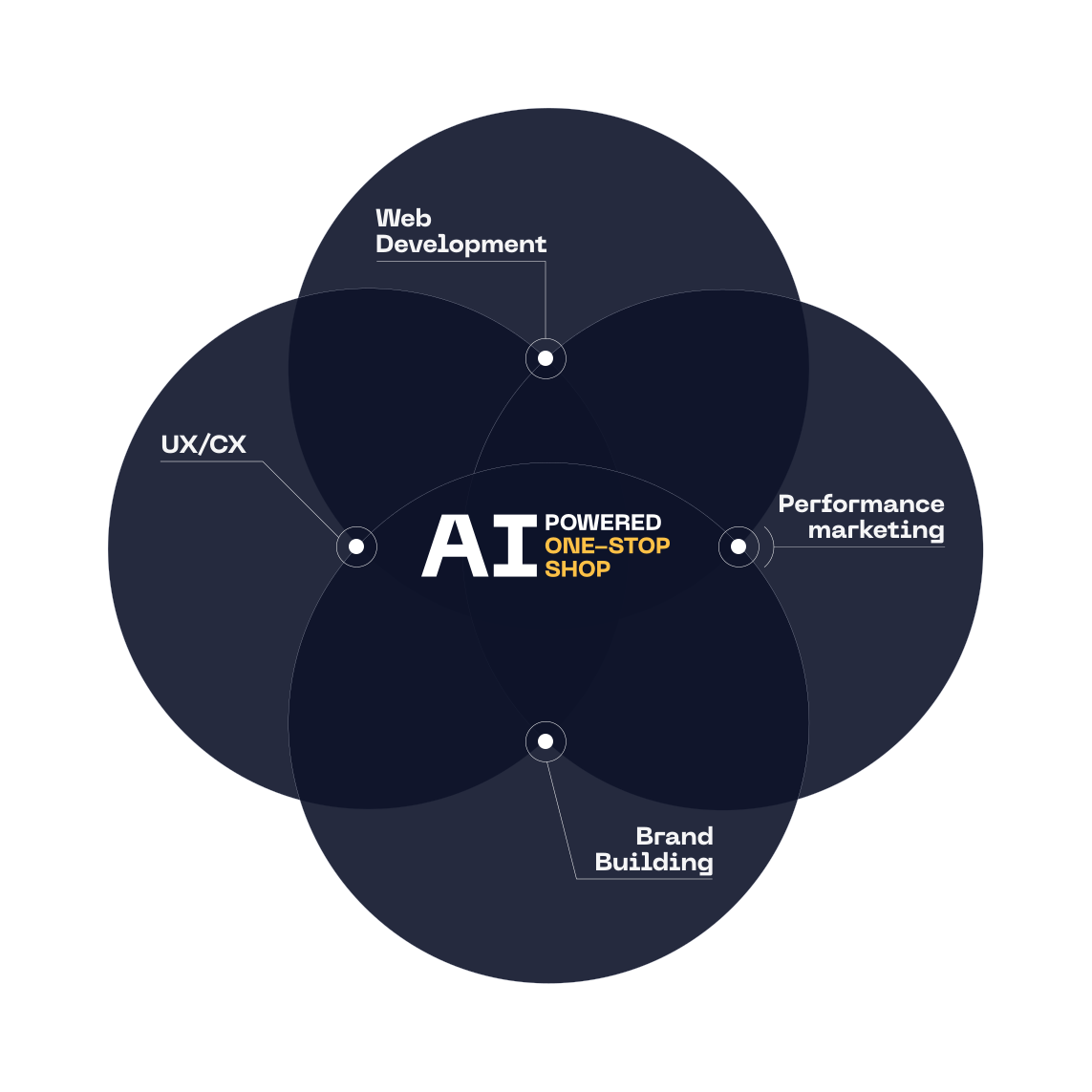
At ui42, we combine strategy, creativity, technology, marketing, and AI into one entity.
We build brands and visual identities, create websites and e-shops, design UX and CRO, create creative content, and deliver measurable results through performance marketing.
Our solutions are enhanced by FLUIDUM – ui42's AI intelligence, which transforms company data into a competitive advantage.
Thanks to this, you gain a partner who can cover the entire digital ecosystem of your business – from the first contact with the brand to conversion.
Don't miss out on the latest news from the world of UX, programming, analytics, and marketing.

Thank you for subscribing!

Get a free consultation
What do you need help with?
Select all options that apply to you
The form has been sent successfully.