What is gamification?
What does it mean
Gamification is the use of game principles in an environment that is not a game itself. The goal is not to entertain the user, but to motivate them towards certain behavior – for example, to make a purchase, register, regularly use an application, or complete an order.
You probably encounter it every day. Collecting points in a loyalty program, unlocking new levels, challenges, badges, or countdowns to the end of an event – these are all examples of gamification.
Well-designed gamification can increase user engagement, strengthen loyalty, and create a positive relationship with the brand.
More info
Definition of Gamification and Its Psychological Principles
The success of gamification is not driven by technology, but by psychology.
People naturally respond to the feeling of progress, rewards, competitiveness, curiosity, or achieving goals. This is why mechanisms like collecting points, levels, badges, or challenges work. They not only provide rewards but also create a sense of advancement.
From a UX perspective, it's a way to motivate the user to complete an action they might not otherwise reach.
The best gamification is often the kind that the user doesn't even realize. They don't perceive it as a game but as a natural part of their experience.
Examples of Gamification in E-commerce (Points, Badges, Challenges)
We encounter gamification much more often today than most people realize.
One of the most well-known examples is the language learning app - Duolingo, which motivates users to return every day using streaks, levels, and rewards for regularity.
The app is not just about language learning but also about the feeling of progress.
A similar principle is used by Nike Run Club, where users unlock achievements, complete challenges, and track their own progress.
In e-commerce, one of the most well-known examples is Starbucks Rewards, which rewards customers with points for every purchase. These can then be used to obtain products or other benefits.
A very interesting approach is also used by Temu, which works with recommendations, time-limited offers, rewards for activity, or various challenges. The goal is to motivate users to return to the app and spend more time in it.
In the e-shop environment, gamification often appears in the form of:
- loyalty points,
- customer levels,
- rewards for product recommendations,
- wheels of fortune,
- competitions,
- or motivation like "spend another €10 and get free shipping".
The common denominator is not the game elements themselves, but the motivation for the user to perform an action that is beneficial for both them and the brand.
How Gamification Increases Conversion Rates and Customer LTV
Gamification doesn't work because it's fun. It works because it influences user behavior.
If a customer sees their progress or is close to a reward, the likelihood of completing the desired action significantly increases.
In e-commerce, this can mean:
- a higher conversion rate,
- more completed registrations,
- higher purchase frequency,
- higher CLV (Customer Lifetime Value),
- better customer retention.
A good example is Starbucks, whose loyalty program has long helped increase purchase frequency and customer value over time. Similarly, Duolingo uses gamification to encourage users to return every day and build a habit.
This is why gamification is used today not only by apps but also by large retail brands, e-shops, and digital services.
Common Mistakes When Implementing Game Elements into Business
The biggest mistake is the idea that simply adding points or badges will make gamification work.
If the game mechanism doesn't provide real value to the user, it will quickly lose its effect.
Common mistakes include:
- complicated rules,
- rewards without real value,
- overly aggressive competition,
- mechanics that don't relate to customer needs,
- gamification without a clear business goal.
Successful gamification doesn't arise as a marketing add-on. It is part of the entire customer experience and supports behavior that is beneficial for both the customer and the brand.
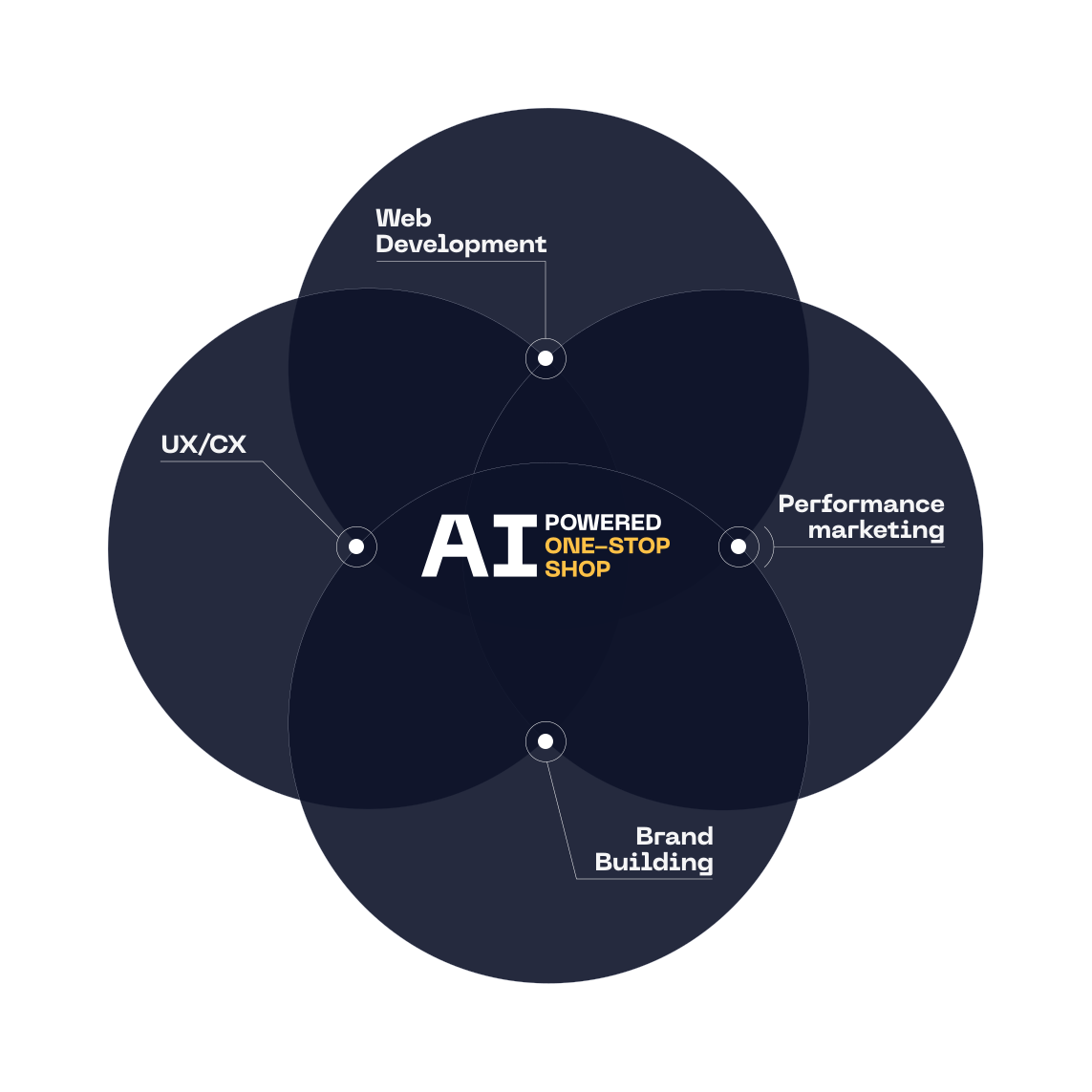
We are a ONE-STOP SHOP for growing your business. We connect web and e-shop development, UX and CX design, brand building, marketing, AI solutions and AI Agents into one functional unit. Because only then can digital consistently deliver performance and growth.
Latest news

ChatGPT Ads are here, are you ready?


Who is a design engineer and what do they do? A discipline at the intersection of design and code


When to start preparing Christmas campaigns?


Strategic Digitization of a B2B Company 3/3: Digitization Roadmap for the CEO

Finax Case Study: Digital Transformation of an Investment Platform Built on User Research



Strategic Digitization of a B2B Company 1/3: Why AI is Not the First Step

Google Ads update August 17, 2026: why your performance may drop and how to prepare


Shopify is not the problem. The problem is the perceptions that circulate about it.

The number of steps in the cart does not determine the conversion of the e-shop. This does.
Contact us
Everything for the growth of your business in one place
At ui42, we combine strategy, creativity, technology, marketing, and AI into one entity.
We build brands and visual identities, create websites and e-shops, design UX and CRO, create creative content, and deliver measurable results through performance marketing.
Our solutions are enhanced by FLUIDUM – ui42's AI intelligence, which transforms company data into a competitive advantage.
Thanks to this, you gain a partner who can cover the entire digital ecosystem of your business – from the first contact with the brand to conversion.
Don't miss out on the latest news from the world of UX, programming, analytics, and marketing.

Thank you for subscribing!

Get a free consultation
What do you need help with?
Select all options that apply to you
The form has been sent successfully.