What is omnichannel marketing?
Veronika VerešováWhat does it mean
Omnichannel marketing is an approach where a brand connects all sales and communication channels into one functional unit. The goal is for the customer to have a consistent experience regardless of whether they are shopping through an e-shop, mobile app, social networks, or a physical store.
Today, customers naturally move between channels. They view a product on Instagram, compare it on their mobile, and purchase it on a laptop or in a store. Omnichannel marketing, therefore, does not address individual channels separately but the entire customer experience as one interconnected system.
More info
What is omnichannel and how does it differ from multichannel?
The terms omnichannel vs multichannel are often confused, but the difference between them is fundamental.
In a multichannel approach, a brand uses multiple channels – such as an e-shop, social media, or a physical store – but each operates more or less independently.
Omnichannel takes it a step further. The channels are interconnected, and the customer can seamlessly transition between them.
Example: A customer saves a product to a wishlist in the app and then sees it after logging in on the web. Or they start a conversation via chatbot and finish it with customer support without having to explain everything again.
This is the true meaning of the omnichannel approach - not in the number of channels, but in their connection.
Why is omnichannel crucial for modern retail?
In modern retail, customers no longer distinguish between the online and offline world. They expect the brand to operate consistently everywhere.
That's why omnichannel retailing is becoming the standard.
Today, the customer expects:
- the same information across channels,
- uniform prices and availability,
- integration of orders, accounts, and communication,
- the ability to combine online and offline shopping.
For retail brands, this means that the e-shop, CRM, warehouse, marketing, and customer support must function as one ecosystem.
How to create a unified customer experience?
The biggest challenge of an omnichannel strategy is not marketing itself, but the integration of data, systems, and processes.
To provide a consistent experience, a brand needs:
- a connected e-shop and CRM,
- unified customer data,
- centralized communication,
- synchronization of warehouses and orders,
- consistent branding and UX across channels.
That's why omnichannel marketing is closely related to technology, data, and UX design - not just advertising.
Examples of successful omnichannel strategies
A good omnichannel today doesn't mean being "everywhere." It means creating a feeling for the customer that they are always communicating with one brand – regardless of the channel.
Typical examples:
- online reservation and in-store pickup,
- personalized campaigns based on purchase history,
- integration of loyalty programs between the app and e-shop,
- customer support with a complete communication history.
The most successful omnichannel strategies today are built on data, automation, and the ability to connect technology with real customer behavior.
Latest news
Imunoklub Case Study: Unification of Two E-shops and More Value from Each Visit


ChatGPT Ads are here, are you ready?


Who is a design engineer and what do they do? A discipline at the intersection of design and code


When to start preparing Christmas campaigns?


Strategic Digitization of a B2B Company 3/3: Digitization Roadmap for the CEO

Finax Case Study: Digital Transformation of an Investment Platform Built on User Research

Strategic Digitization of a B2B Company 1/3: Why AI is Not the First Step
Google Ads update August 17, 2026: why your performance may drop and how to prepare


Shopify is not the problem. The problem is the perceptions that circulate about it.

Contact us
Everything for the growth of your business in one place
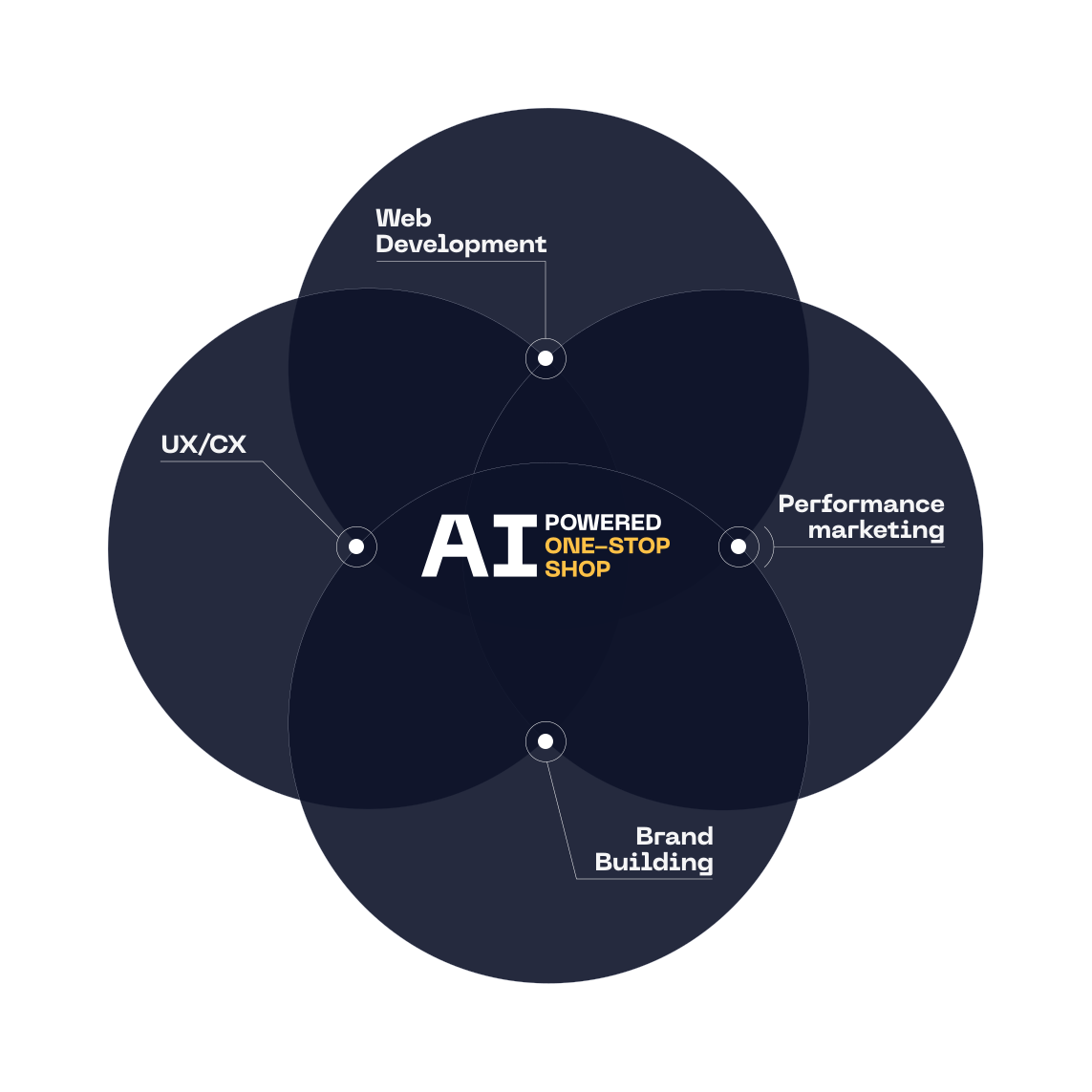
At ui42, we combine strategy, creativity, technology, marketing, and AI into one entity.
We build brands and visual identities, create websites and e-shops, design UX and CRO, create creative content, and deliver measurable results through performance marketing.
Our solutions are enhanced by FLUIDUM – ui42's AI intelligence, which transforms company data into a competitive advantage.
Thanks to this, you gain a partner who can cover the entire digital ecosystem of your business – from the first contact with the brand to conversion.
Don't miss out on the latest news from the world of UX, programming, analytics, and marketing.

Thank you for subscribing!

Get a free consultation
What do you need help with?
Select all options that apply to you
The form has been sent successfully.