Agentic AI
Veronika VerešováWhat does it mean
Agentic AI represents a new generation of artificial intelligence, which, unlike classical models, does not just respond passively, but acts actively. These are systems composed of so-called AI agents, which can independently plan, make decisions, and use external tools to achieve a specific goal with minimal human supervision.
More info
These are intelligent systems composed of so-called AI agents, which possess their own "agency" – the ability to independently plan, make strategic decisions, and interact with the external digital world without constant human supervision. If generative AI defines the travel itinerary, Agentic AI is the digital assistant that actually books your flights, negotiates a better hotel rate, and proactively arranges alternative transportation in case of a train delay.
Agentic AI is not just one large model, but a sophisticated architecture composed of four key pillars:
-
Brain (LLM Reasoning): Utilizes the reasoning capabilities of large language models to deconstruct complex tasks into smaller, logical steps.
-
Planning and Memory: The agent has short-term memory for current tasks and long-term memory for storing user preferences and learned experiences.
-
Tool Use: The ability to call external APIs, browse the internet, work with databases, or even control user interfaces of other software (so-called Computer Use).
-
Multi-agent Orchestration: The pinnacle of technology is the collaboration of multiple specialized agents. In this system, one agent acts as a "manager" (orchestrator), assigning tasks to specialists (e.g., analyst, buyer, or copywriter).
Agentic Commerce: A New Era of Digital Commerce
Agentic AI transforms the customer's shopping journey from vertical (visiting a specific e-shop) to horizontal (solving the entire intent through an agent).
Main Characteristics of Agentic Systems
-
Proactivity instead of Reactivity: Unlike traditional software that waits for a command, agentic systems monitor the environment (warehouses, prices, weather) and act predictively.
-
Real-time Adaptability: If an agent encounters an obstacle (e.g., out-of-stock goods), it does not report an error but independently reassesses the plan and finds an alternative solution.
-
Accelerated Evolution: The capabilities of agents are dramatically improving. The time horizon for tasks that AI can successfully complete is currently doubling every 7 months.
-
Interface Reduction: Agentic AI gradually eliminates the need for complex web menus and tables. The entire UI/UX is reduced to a natural conversation, where the agent performs complex operations in the background.
Practical Use in Business and E-commerce
The implementation of agentic systems allows companies to automate processes that were previously considered exclusively human.
-
Autonomous Buyer (B2C & B2B): Agents will represent customers, negotiate prices, compare parameters across the entire internet, and conduct transactions through new protocols (e.g., AP2).
-
Hyper-personalized Marketing: An AI agent can not only create a campaign but also deploy it, monitor its performance in real-time, and autonomously adjust the budget or visuals based on data.
-
Customer Care 3.0: The agent not only "responds" but actually solves problems – processes refunds, updates status in CRM, contacts the carrier, and sends the customer an apology with a gift code.
-
Supply Chain Optimization: By utilizing agentic orchestration, companies can automate inventory replenishment, supplier communication, and logistics planning with minimal buyer intervention.
Latest news

Phishing website: What to do when someone copies your e-shop?


Imunoklub Case Study: Unification of Two E-shops and More Value from Each Visit


ChatGPT Ads are here, are you ready?


Who is a design engineer and what do they do? A discipline at the intersection of design and code


When to start preparing Christmas campaigns?


Strategic Digitization of a B2B Company 3/3: Digitization Roadmap for the CEO


Finax Case Study: Digital Transformation of an Investment Platform Built on User Research


Strategic Digitization of a B2B Company 1/3: Why AI is Not the First Step

Google Ads update August 17, 2026: why your performance may drop and how to prepare

Contact us
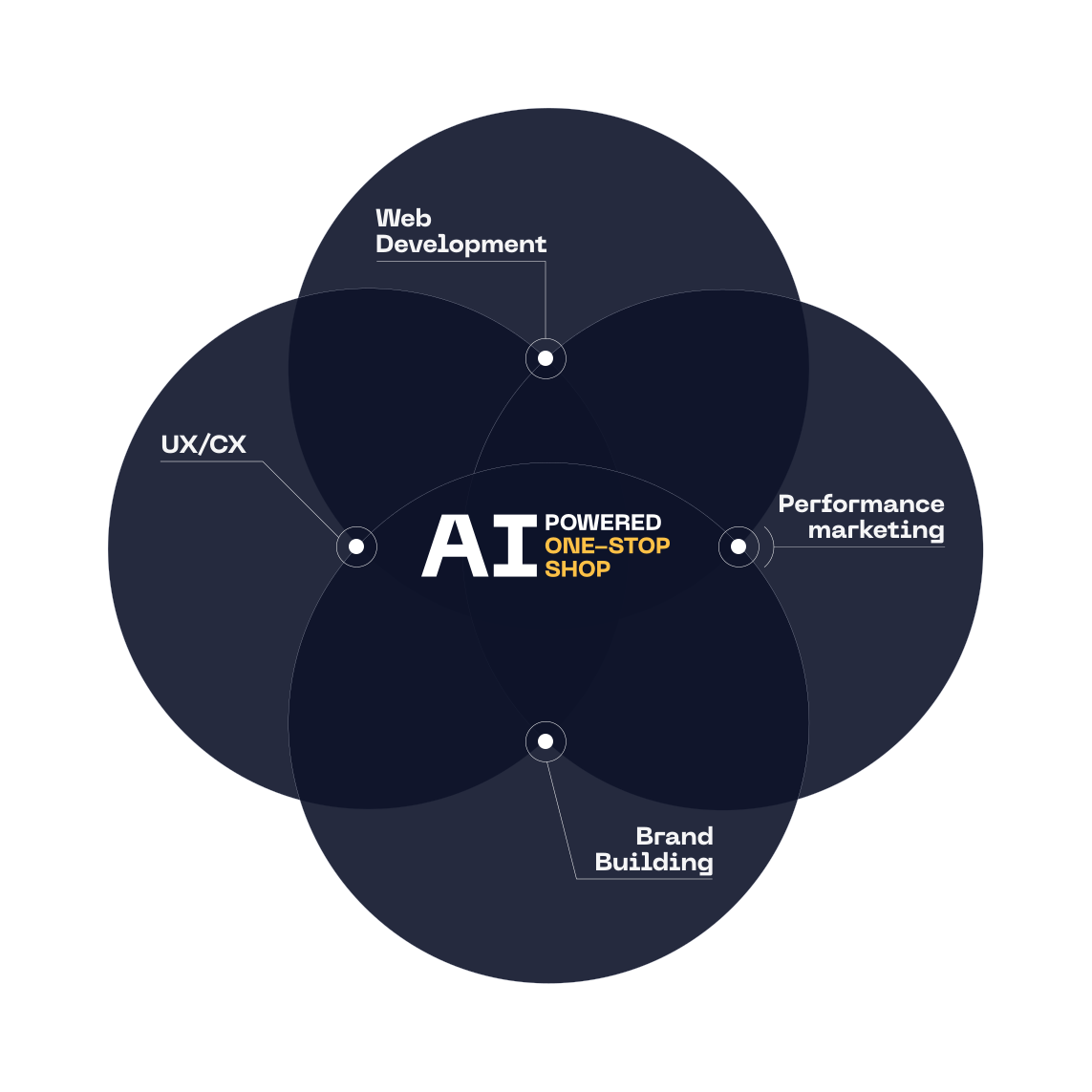
Everything for the growth of your business in one place
At ui42, we combine strategy, creativity, technology, marketing, and AI into one entity.
We build brands and visual identities, create websites and e-shops, design UX and CRO, create creative content, and deliver measurable results through performance marketing.
Our solutions are enhanced by FLUIDUM – ui42's AI intelligence, which transforms company data into a competitive advantage.
Thanks to this, you gain a partner who can cover the entire digital ecosystem of your business – from the first contact with the brand to conversion.
Don't miss out on the latest news from the world of UX, programming, analytics, and marketing.

Thank you for subscribing!

Get a free consultation
What do you need help with?
Select all options that apply to you
The form has been sent successfully.