The biggest change in 2026? AI is shifting from models to systems. From one-time prompts to agents, workflows, and infrastructure that have a direct impact on business.

2026: AI Becomes a "Production-Ready" Tool (But with Clear Boundaries)
In 2026, AI is no longer just an innovation experiment or a marketing toy. It becomes part of the core processes of companies – from development, through marketing, to customer support.
AI is reliable for moderately complex tasks, not for strategic management of the entire company.
Typical examples where AI will work very well:
- deployment and optimization of a single advertising campaign,
- preparing a solution proposal for a specific client request,
- smaller programming tasks or modifications of existing code,
- data analysis with a clear goal and inputs.
AI no longer needs to be constantly "held by the hand." Modern models handle long, multi-step tasks, maintain context, and work independently for hours.
The Rise of AI Agents: Work Shifts from Doing to Supervising
One of the strongest trends of 2026 is the mass emergence of AI agents – autonomous systems that do not just execute a single command but an entire process.
In practice, it already looks like this today (and increasingly so with us):
- the client submits a request,
- the AI agent validates it (is it realistic? complete? does it make sense?),
- prepares a solution proposal or response,
- suggests further steps,
- the human only checks and approves the result.
This model will spread across companies in 2026 regardless of size. Employees gradually transform from executors to editors, supervisors, and quality and context guarantors. And the same principle is beginning to shift into e-commerce.
Agentic Commerce: When the Customer is Not a Human, but an Algorithm
What OpenAI launched with Instant Checkout becomes the standard in 2026. In so-called agentic commerce, it is no longer the human who shops directly, but their AI agent – based on intent, budget, and preferences.
According to an analysis by McKinsey & Company (2025), it is expected that by 2030, the volume of transactions conducted through AI agents will reach a global value of 3 to 5 trillion dollars.
How will it work? Instead of the user comparing products, prices, reading reviews, and manually filling out checkout, they simply tell their AI agent: "Buy me the best price/performance product up to €300 and deliver it by Friday."
Brands will no longer fight just for the user's attention but for the preference of the algorithm, which will decide for the customer what to buy.
Those e-shops that are not technically prepared and are not readable and trustworthy for agents will automatically drop out of their selection.
The New SEO is GEO: Optimization for AI Agents
With the rise of agents, optimization is also changing. Traditional SEO is complemented by GEO – Generative Engine Optimization.
The goal is no longer just a good position in the search engine, but for the AI agent to understand what you are selling and to recommend or purchase your product without hesitation.
What e-shops will need to focus on in 2026
Decisive will be technical foundations, thanks to which the e-shop is understood not only by people but also by machines.
In other words: if your AI agent cannot "read" you, it will never recommend or purchase you.
1. Understandable and consistent structured data (schema.org)
The e-shop must be able to communicate basic information clearly and machine-readably:
- what exactly it sells,
- at what price,
- whether the product is available,
- who the seller is and what their trustworthiness is.
For this purpose, structured data according to the schema.org standard is used. However, it is not only their deployment that is important but also consistency across the entire website – from product pages through categories to contact and information sections.
AI agents build a picture of the e-shop from the whole. If the data is inaccurate, outdated, or contradictory, the agent loses trust, and the e-shop simply drops out of the selection.
2. Robust and secure API for agents
In the agentic economy, the e-shop does not communicate only with the human's web browser but also with software agents. They need to:
- obtain product information in real-time,
- verify price and availability,
- create an order,
- work with the purchase status or payment.
Without a reliable, well-designed API, the e-shop is a dead end for AI agents – even if it has a great design and offer.
OpenAI ACP and Google AP2: Building Infrastructure for Autonomous Shopping
Technological leaders are already laying the foundations for agents to shop independently and securely.
OpenAI – Agentic Commerce Protocol (ACP)
OpenAI, in collaboration with Stripe, is building the ACP protocol, which allows completing a purchase directly in the conversation. The user does not leave the chat, the agent handles the selection and payment.
Google – Agent Payments / Checkout Integrations
Google is taking a similar path and is preparing infrastructure that will allow agents to go through the shopping process:
- Native checkout integration – the store provides a REST API, and Google can complete the checkout programmatically.
- Embedded checkout – for more complex or branded processes via iframe.
These solutions are the foundation for a future where the agent will not only advise but also act.
Europe, Trust, and Regulation: Why the EU is Unique
The European market has one major specificity compared to the USA or Asia - GDPR, EU AI Act, and local preferences (e.g., in Germany, a strong emphasis on payment control) mean that agentic commerce in the EU:
- must be transparent,
- must be auditable,
- must clearly define who acts and with what authorization.
Therefore, the concept of "Know Your Agent" is emerging – verifying the identity and mandate of the AI agent similarly to how we verify the user today.
This will determine whether shopping through chatbots will catch on massively in Slovakia. And everything suggests that we will see the first real purchases this year.
2026 as the Beginning of the Agentic Economy
2026 is not about AI replacing people. It is about people who work with AI agents replacing those who do not.
In e-commerce, marketing, and development, an era begins where tasks are solved by autonomous systems, people control, decide, and set the direction, and the shopping journey shortens to a single conversation.
Companies that are already investing in agent-ready infrastructure, data, and processes are building an advantage in a world where the customer will increasingly not be a human – but their AI agent.
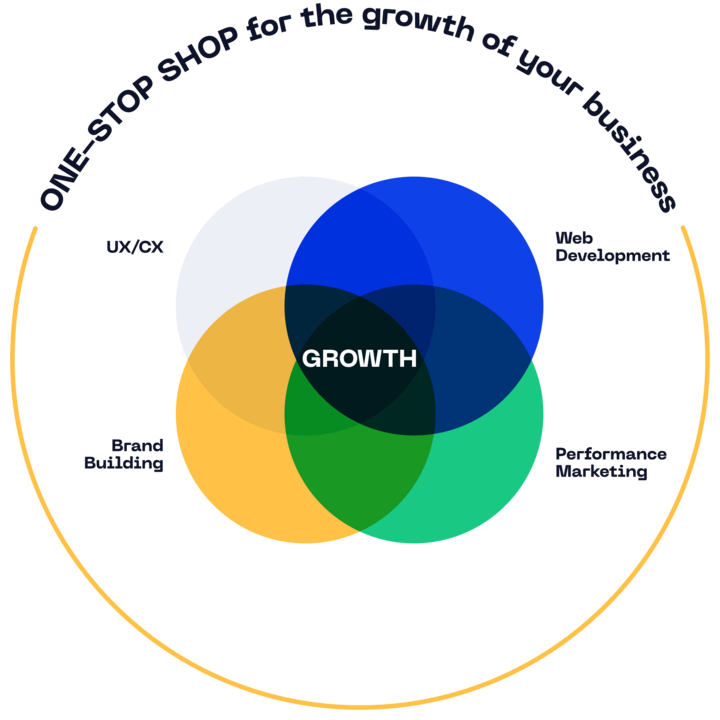
If you want your e-shop to be ready for the era of AI agents, it is not enough to address individual adjustments in isolation. You need a comprehensive portfolio of a ONE-STOP SHOP that supports the growth of your business. We combine development, UX, and marketing into one whole because only such an integrated approach can truly and sustainably increase the value of your business in the digital world of 2026.