What is Magento?
What does it mean
Magento is a powerful e-commerce platform designed for medium and large online stores. Since 2018, it has been owned by Adobe, and its enterprise version is now called Adobe Commerce.
Today, we distinguish between two main versions:
-
Magento Open Source – a free open-source version,
-
Adobe Commerce – a paid enterprise solution with extended features and official support.
Both versions are based on the same technological foundation, but differ in the range of functionalities, level of support, and scalability.
More info
Magento: When is it time to switch to an enterprise solution?
Magento Open Source is suitable for companies that need a flexible platform and are ready to invest in development, integrations, and infrastructure management.
Switching to Adobe Commerce makes sense when:
-
the e-shop generates higher turnover and grows internationally,
-
it combines B2B and B2C models,
-
it needs advanced pricing and promotional rules,
-
it requires native B2B functionalities,
-
it works with an extensive catalog and high traffic,
-
it needs official technical support and SLA.
The enterprise version includes built-in tools such as customer segmentation, advanced reports, AI search, product recommendations, and cloud solutions (Adobe Commerce Cloud).
E-shop on Magento: Why do global players with thousands of products choose it?
An e-shop on Magento is typical for companies that consider e-commerce a key business channel.
The platform allows:
-
managing extensive product catalogs,
-
operating multiple storefronts from a single system,
-
integrating ERP, CRM, PIM, and other systems,
-
scaling performance during high traffic peaks.
Magento (Adobe Commerce) is used or has been used by global brands like Nike, Coca-Cola, Ford, and other international retail brands that need a robust and customizable platform for complex e-commerce operations.
Ecosystem and management: What does the backend and Magento Marketplace offer?
A strong point of the platform is its administration and extensibility.
Magento backend allows detailed management of products, customers, orders, pricing rules, warehouses, and multiple language or regional versions of the website.
Part of the ecosystem is also the Magento Marketplace, where thousands of extensions are available – from payment gateways, through marketing tools, to integration modules. In the case of Magento Open Source, advanced functionalities are often handled through modules, while Adobe Commerce has many of them integrated directly into the system's core.
For complex projects, Magento is often used in combination with modern architecture (headless, API-first approach), which allows a high degree of customization.
Latest news

Imunoklub Case Study: Unification of Two E-shops and More Value from Each Visit


ChatGPT Ads are here, are you ready?


Who is a design engineer and what do they do? A discipline at the intersection of design and code


When to start preparing Christmas campaigns?


Strategic Digitization of a B2B Company 3/3: Digitization Roadmap for the CEO

Finax Case Study: Digital Transformation of an Investment Platform Built on User Research


Strategic Digitization of a B2B Company 1/3: Why AI is Not the First Step

Google Ads update August 17, 2026: why your performance may drop and how to prepare


Shopify is not the problem. The problem is the perceptions that circulate about it.

Contact us
Everything for the growth of your business in one place
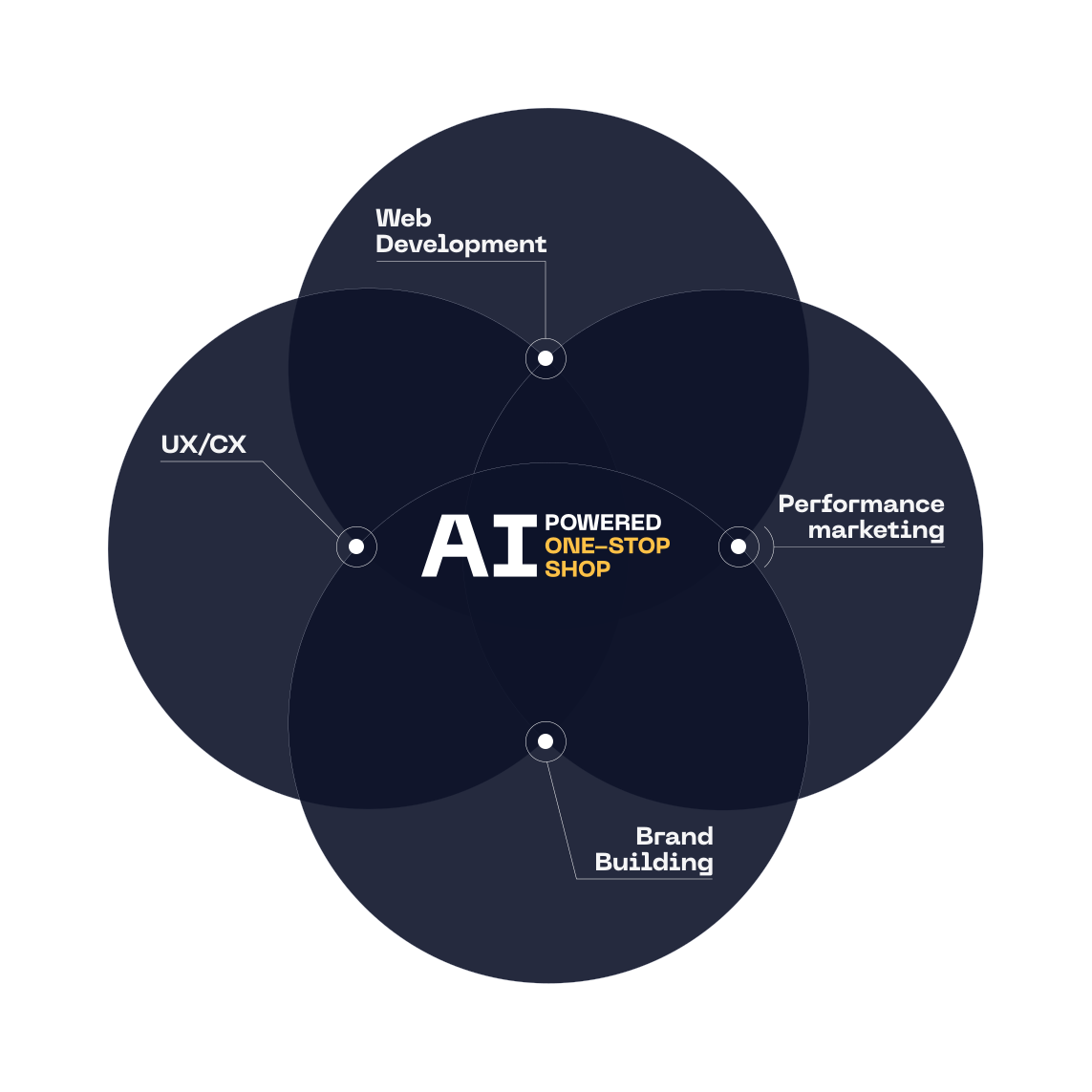
At ui42, we combine strategy, creativity, technology, marketing, and AI into one entity.
We build brands and visual identities, create websites and e-shops, design UX and CRO, create creative content, and deliver measurable results through performance marketing.
Our solutions are enhanced by FLUIDUM – ui42's AI intelligence, which transforms company data into a competitive advantage.
Thanks to this, you gain a partner who can cover the entire digital ecosystem of your business – from the first contact with the brand to conversion.
Don't miss out on the latest news from the world of UX, programming, analytics, and marketing.

Thank you for subscribing!

Get a free consultation
What do you need help with?
Select all options that apply to you
The form has been sent successfully.